Convenience stores, or konbini, are central to daily life in Japan. For many international students and residents, 7-Eleven is a popular choice for part-time work. Understanding pay, qualifications, and application routes can make landing this job easier.
Understanding Hourly Wages at 7-Eleven Japan
Hourly rates can vary quite a bit. Location and time slots play a big role in setting pay levels. Knowing where to look increases your chance to earn more.
Average Hourly Wages by Region
Major urban centers like Tokyo offer higher pay than rural areas. Typical rates for Tokyo and Osaka often start around 1,100 yen per hour.
Smaller towns or prefectures might pay closer to 950–1,000 yen per hour. Even in big cities, some stores pay above 1,200 yen after midnight.
- Tokyo: 1,100–1,400 yen/hour
- Osaka/Yokohama: 1,050–1,300 yen/hour
- Kyoto/Sapporo: 1,000–1,250 yen/hour
- Rural Japan: 950–1,100 yen/hour
Pay can also rise for late-night shifts. Night shifts (10 p.m. to 5 a.m.) legally earn 1.25x base rates by Japanese law. Not everyone prefers these hours, though.
Other Factors Affecting Pay
Some stores pay slightly more for employees with strong Japanese language skills. Occasionally, bonuses come after long-term employment or excellent performance.
Working during high-demand periods (like New Year’s or Golden Week) may bring additional incentives, although this is not guaranteed everywhere.
Visa Requirements for Foreign Workers at 7-Eleven
Before starting any baito (part-time job), foreigners must meet legal work requirements. Understanding visa types is crucial for a smooth process.
Eligible Visa Types
The most common visa for student workers is the "Student" or "College Student" visa. This allows up to 28 hours of work per week during the semester, and up to 40 hours during school holidays.
- Student visa (with Permit to Engage in Activity Other Than That Permitted by the Status of Residence Previously Granted)
- Dependent visa (for spouses or children of legal residents)
- Designated activities (for working holiday makers)
Obtaining the Necessary Work Permit
Most visas do not automatically allow part-time work. For students, a "Shikakugai Katsudo Kyoka" permit is required.
This permit can be requested at your local immigration office. Bring your residence card, application form, and passport. The process often takes one to two weeks.
Work Hour and Job Type Restrictions
International students cannot exceed 28 weekly work hours. Nighttime and restricted industries (bars or gambling) are not permitted.
Convenience store jobs fall within approved activities. However, if found overworking, visa status is at risk, so it’s better to err on the cautious side.
How to Apply for a 7-Eleven Baito Job
The application process is increasingly digital, but in-person visits still happen. It helps to know both methods.
Online Application Process
- Access the 7-Eleven Japan careers website
- Search by region and nearest station
- Review listings; select shifts and locations that suit your schedule
- Fill in required info (name, contact, visa status, availability, and any language skills)
- Wait for a call or email to schedule an interview
Some stores post openings on third-party sites like TownWork or Indeed Japan, too.
In-Person Applications
- Visit the shop during non-peak times (afternoons are less busy)
- Politely ask the staff if they are currently hiring
- Fill in a simple paper application if available, or be directed to the online portal
- Dress neatly and bring ID, residence card, and copies of your permit—just in case
The onsite approach may only work in certain neighborhoods. In larger cities, stores prefer online applications for better tracking.
Interview Tips
Basic Japanese is critical. Interviews are almost always conducted in Japanese, even at locations with foreign staff.
Many managers value reliability over perfect language skills. Punctuality and expressing willingness to learn help a lot. If unsure about a question, honesty goes further than guessing.
Realistic Job Expectations and Training
Life at a 7-Eleven isn’t as easy as just selling snacks. The environment is fast-paced and requires flexibility.
Common Daily Tasks
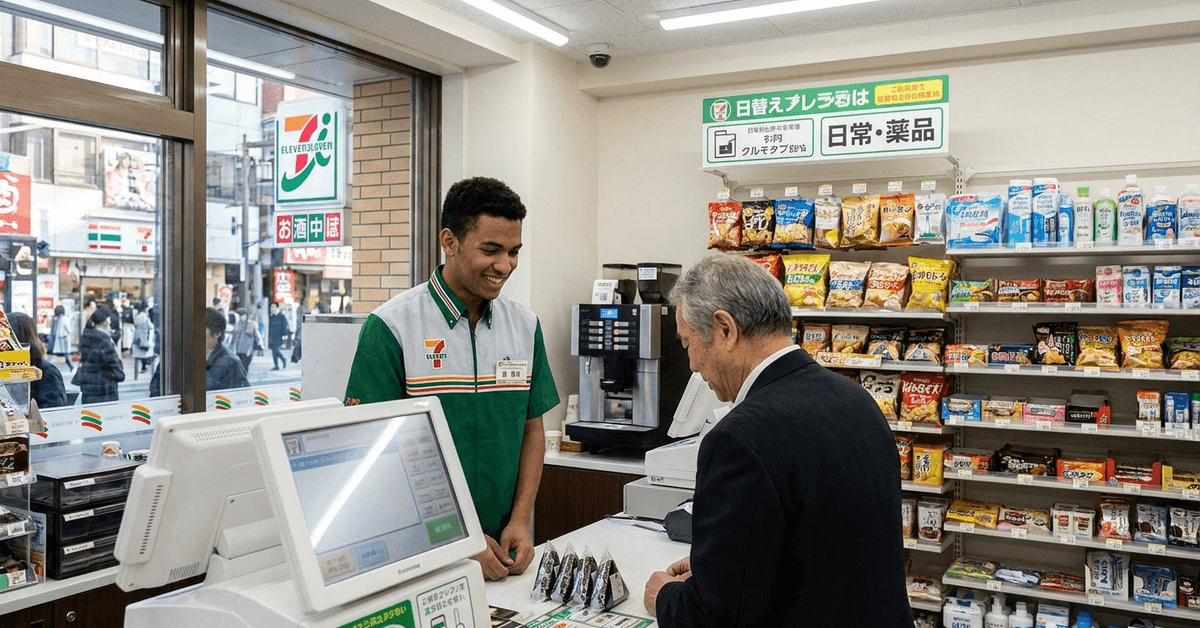
- Register operation (scanning, handling cash, electronic payment)
- Filling and facing shelves
- Cleaning and waste sorting
- Preparing oden, coffee, and hot snacks
- Processing parcel deliveries and bill payments
Expect to be trained for all types of duties, not only cashier work. Many jobs rotate responsibilities throughout a shift.
Typical Work Shifts
- Morning (6 a.m.–9 a.m.): Highest rush with salarymen and commuters
- Daytime (9 a.m.–5 p.m.): Stock management and cleaning
- Evening (5 p.m.–10 p.m.): After-school peak and dinner rush
- Night (10 p.m.–6 a.m.): Premium pay for lower-traffic but cleaning-intensive shifts
Some staff prefer overnight shifts for higher hourly rates, though the work is often less interactive. Choose shifts that fit your schedule and preferences.
Language Requirements and Preparation
Working at 7-Eleven is possible even with conversational Japanese (JLPT N4 or better is ideal). Some Japanese reading is needed to understand shelf tags, registers, and instructions.
Useful Apps for Language Support
- Google Translate (instant camera function for shelf tags)
- Imiwa? or Takoboto (Japanese-English dictionary apps)
- Obenkyo (for kanji learning on-the-go)
- Anki (for flashcard-based review)
Colleagues may help with language issues, but self-study is necessary for smooth daily performance. Friendly store managers sometimes provide extra practice space for non-native speakers, which can be a relief starting out.
Common Challenges and Real-World Tips
Some staff report minor surprises after starting the job. Rushing during peak hours can be stressful. It is normal to feel overwhelmed at first.
Handling Mistakes
Register errors and wrong item scans are common early on. A good approach is to let colleagues know, rather than try to hide the slip.
Forgetting minor procedures, like oden rotation or cleaning schedules, happens. Most supervisors prefer honest questions over repeated errors.
Managing Shifts and Studies
Balancing work and school is tricky, especially near exam season. Advance notice for schedule changes is highly recommended.
Communicating about holidays or personal emergencies helps maintain trust, even if the store is very busy.
Conclusion
Working part-time at 7-Eleven in Japan offers solid earnings and real cultural immersion. Understanding visa rules, preparing for daily responsibilities, and managing communication can vastly improve both your success and experience.
With the right preparation, the baito experience is rewarding even if it feels demanding at first. For many, it’s a practical step into Japanese society, one shift at a time.