Uber Eats delivery opportunities can appeal to people looking for flexible, app-based ways to earn in supported markets. Students, people with another occupation, and those exploring independent delivery work may consider the platform depending on local availability.
This article is designed for anyone interested in becoming a delivery partner with Uber Eats. It explains general eligibility considerations, the application process, required documents, and what applicants can expect after completing onboarding.
Because requirements differ internationally, applicants should always check the official information available for their specific country or city.
Why Consider Uber Eats Delivery Work?
Food delivery has become part of everyday life in many cities around the world. Uber Eats connects customers with restaurants and other participating merchants while providing delivery opportunities in markets where courier registration is supported.
For couriers, one of the main attractions is potential scheduling flexibility. Depending on the local operating model, delivery activity may fit around studies, family responsibilities, another occupation, or other commitments.
However, availability, earnings, working arrangements, and legal classifications vary by location. Delivery requests and income should never be considered guaranteed.
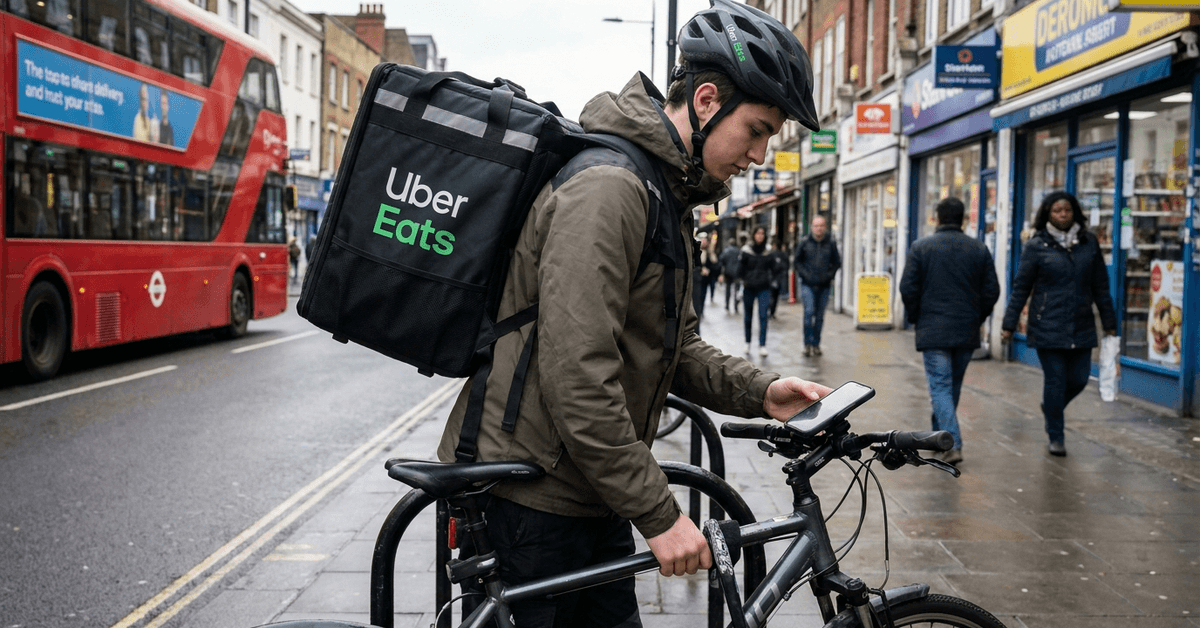
Eligibility Requirements for Delivering with Uber Eats
There is no single worldwide set of Uber Eats eligibility requirements. Age limits, documentation, vehicle rules, insurance, screening, and work authorization requirements depend on local laws and platform policies.
Minimum Age and Legal Eligibility
Applicants must meet the minimum age requirement established for their market.
Valid government-issued identification is generally required during registration. Some jurisdictions may also require proof of legal eligibility to perform delivery work or other documentation related to residency or work authorization.
Applicants should follow the requirements displayed during their local registration process.
Vehicle and Insurance Criteria
Uber Eats may support different transportation methods depending on location.
These can include bicycles, e-bikes, scooters, motorcycles, cars, or other locally accepted options.
Motorized vehicle couriers may need a valid driving licence, registration, insurance, inspections, or other documents. Commercial delivery activity can also require specialized insurance in some jurisdictions.
Required Documents
The documents requested during registration depend on the applicant's location and selected transportation method.
Common examples may include:
- Valid government-issued identification
- Profile photo
- Driving licence where applicable
- Vehicle registration where required
- Appropriate insurance documentation
- Work authorization where applicable
- Tax or business information where required
- Additional locally required documents
Applicants should prepare clear and current copies of any documents requested by Uber.
Verification and Screening
Uber may require identity verification, document checks, background screening, or other procedures where applicable.
The exact screening process depends on the country and local regulatory requirements.
Applicants should not assume that a background check used in one market will automatically be required everywhere.
How to Start the Uber Eats Application Process
The registration process can generally be started online in supported markets. Exact steps may vary according to location and delivery method.
1. Create Your Uber Account
The first step is to visit Uber's official delivery platform and begin registration.
Applicants provide basic personal information and select their location and an available delivery method.
Accurate information is important because inconsistencies may result in additional verification requests or delays.
2. Upload Required Documentation
The platform will indicate which documents are necessary for the applicant's market.
Clear, readable images or scans can help prevent avoidable verification problems.
Applicants should make sure that documents are valid and up to date before submitting them.
3. Provide Vehicle and Insurance Information
Applicants using a motorized vehicle may be asked for driving, registration, and insurance information.
Requirements depend on the transportation method and jurisdiction.
Bicycle couriers may face fewer vehicle-related documentation requirements, although local identification, safety, or other eligibility rules can still apply.
4. Complete Required Verification
Uber may perform identity checks, document verification, screening, or other onboarding procedures.
Additional information can occasionally be requested.
Applicants should monitor communications from Uber and respond to legitimate verification requests when necessary.
5. Complete Any Additional Onboarding Steps
Some markets may have additional onboarding requirements.
These can depend on local regulations, the selected transportation method, and the way Uber Eats operates in that jurisdiction.
Applicants should complete only the steps shown through official Uber channels.
6. Access the Uber Driver App
Once the required onboarding process is complete and the account is activated, eligible couriers can use the Uber Driver app for delivery activity.
The app provides access to available delivery requests and other features supported in the courier's market.
Activation does not guarantee a particular number of deliveries or level of earnings.
Key Features of Uber Eats Delivery Work
The experience of delivering with Uber Eats varies internationally, but several general characteristics are common across many markets.
Flexible Working Arrangements
In markets where couriers can decide when to go online, delivery work may provide significant scheduling flexibility.
Couriers may choose periods that fit around other responsibilities rather than following a traditional fixed schedule.
However, contractual arrangements and worker classifications vary. Applicants should review the conditions that apply specifically to their location.
Order Management Through the App
The Uber Driver app is the primary tool used to manage delivery activity.
Depending on the market, it can provide delivery requests, pickup details, navigation information, account information, and earnings-related features.
The precise information displayed before a courier accepts a request can differ according to local rules and platform policies.
Navigation and Delivery
Navigation tools can help couriers locate participating merchants and customer destinations.
Couriers should also become familiar with local streets, parking restrictions, traffic rules, and safe pickup and drop-off practices.
A reliable smartphone and internet connection are important for accessing delivery information while working.
How Delivery Earnings Work
Uber Eats does not have a single worldwide payment rate.
Courier earnings can depend on location, completed deliveries, distances, time, demand, local payment calculations, and other factors.
Applicants should review the payment information provided for their market rather than relying on earnings estimates from another country.
Busy Delivery Periods
Lunch and dinner periods may experience greater food-delivery activity in many locations.
Weekends, events, holidays, weather, and local consumer habits can also influence demand.
Greater demand does not guarantee a particular number of requests or a specific level of earnings.
Promotions and Incentives
Uber may occasionally provide promotions or incentives to eligible couriers.
These can vary according to market, account, eligibility, and time period.
Promotions should be treated as temporary opportunities rather than a guaranteed component of courier income.
Tips and Customer Feedback
In-app tipping may be available in some markets.
Customer tipping habits vary significantly around the world, so tips should not be included as guaranteed income when estimating potential earnings.
Customer feedback may also be part of the delivery experience where applicable. Professional service can contribute to a positive experience, but higher ratings should not be presented as a guaranteed way to receive more or higher-paying orders.
Payment and Payout Options
Payout arrangements vary between countries.
Some markets may offer regular bank transfers, while additional payout options can be available to eligible couriers depending on local features and account requirements.
Applicants should not assume that weekly payouts or instant cash-outs are available everywhere.
The Uber Driver app and official local Uber information provide the most relevant details about available payment methods.
Common Application Challenges
Applicants can sometimes encounter issues during registration.
Understanding the most common problems can help reduce avoidable delays.
Document Verification
Unclear, expired, incomplete, or inconsistent documents can create verification problems.
Applicants should carefully review each document before uploading it.
If Uber requests a replacement or additional information, applicants should use official channels to provide the requested material.
Understanding Local Regulations
Road, parking, insurance, licensing, tax, and commercial-delivery rules differ internationally.
Uber provides platform-specific requirements, but couriers are also responsible for understanding applicable local laws.
Official government information can be useful when legal requirements are unclear.
Payment Questions
The app can provide earnings and payment information according to the features available in the courier's market.
Uber's official support resources can also help with account-specific payout questions.
Applicants should avoid relying on third-party websites for sensitive payment or account instructions.
Tips for a Smoother Uber Eats Application
Preparation can help applicants avoid unnecessary problems during onboarding.
Prepare Complete Documentation
Applicants should gather the requested documents before beginning registration.
Photos or scans should be clear, complete, and easy to read.
Names and other identifying information should also be consistent across submitted records.
Use a Compatible Smartphone
Delivery activity relies heavily on the Uber Driver app.
A compatible smartphone, reliable mobile data, sufficient battery life, and functioning location services can make delivery activity easier to manage.
Couriers may also find a suitable phone mount or portable charger useful where safe and legal.
Allow Time for Verification
There is no universal Uber Eats screening or activation timeframe.
Processing can depend on location, documentation, screening requirements, application volume, and regulatory procedures.
Applicants should therefore avoid relying on claims that verification will necessarily take a few days or a specific number of weeks.
Legal and Tax Obligations
The legal status of Uber Eats couriers varies around the world.
Depending on the jurisdiction and local operating arrangement, couriers may be treated differently under employment, contractor, self-employment, tax, insurance, and social-security laws.
Income Reporting
Delivery earnings may create tax-reporting obligations.
Some couriers may need to register with tax authorities, maintain financial records, report income, or make social-security contributions.
These requirements should be verified through official government resources applicable to the courier's jurisdiction.
Keeping Records
Maintaining records of earnings and eligible expenses can help couriers understand their actual financial results.
Potential expenses include fuel, charging, insurance, vehicle maintenance, repairs, mobile data, parking, and delivery equipment.
Accurate records may also be important for local tax purposes.
Insurance and Safety Requirements
Applicants using cars, motorcycles, or scooters should carefully check insurance requirements.
Standard personal insurance does not necessarily cover commercial food-delivery activity.
Couriers should verify local law, Uber's requirements, and their insurer's terms before beginning deliveries.
Cyclists and motorcyclists should also follow local rules concerning helmets, lights, reflective equipment, and other safety measures.
What Happens After Account Activation?
After completing the necessary onboarding steps, eligible couriers can access delivery activity through the app.
New couriers should take time to understand the app, local pickup procedures, delivery instructions, and available support features.
Learning local routes and restaurant locations can become easier with experience.
Couriers should also monitor their earnings and operating expenses to determine whether delivery activity remains financially worthwhile.
Is Uber Eats Delivery Right for You?
Uber Eats delivery may appeal to people who value flexible scheduling and independent, app-based activity.
It can potentially serve as supplementary earning activity or a larger source of income depending on individual circumstances and local conditions.
However, available orders and earnings are not guaranteed.
People who require fixed schedules, predictable wages, or traditional employee benefits should carefully examine the local arrangement before relying on delivery work.
How to Apply for Uber Eats Delivery Opportunities
The most reliable place to begin is Uber's official delivery platform.
Applicants can check whether courier registration is available in their location, review accepted transportation methods, and see the documentation required for onboarding.
Third-party websites that promise guaranteed activation, guaranteed income, or unofficial shortcuts around verification should be avoided.
EXPLORE UBER EATS DELIVERY OPPORTUNITIES →
Use Uber's official delivery platform to review current availability, requirements, and registration options for your market.
Conclusion – Taking the Next Steps With Uber Eats
Delivering with Uber Eats can provide flexible earning opportunities in supported markets, but the application process and working conditions differ internationally. Eligibility, documentation, screening, transportation methods, payment options, taxes, and insurance requirements all depend on location.
Preparing accurate documentation can help reduce avoidable onboarding issues, but it does not guarantee rapid activation. Applicants should also avoid assuming a particular level of earnings or order availability.
Before registering, prospective couriers should understand their local legal responsibilities and estimate expenses associated with their chosen transportation method. Official information for their jurisdiction should always take priority over requirements published for another country.
For those interested in flexible app-based delivery activity, Uber Eats may be worth exploring where courier registration is supported. The official platform provides the appropriate starting point for reviewing requirements and beginning the application process.