
Cleaning jobs in Japan pay between 950 and 1,200 yen per hour, and they rarely require fluent Japanese. That makes them one of the few job categories where language barriers shrink instead of grow.
The catch most job seekers miss: your visa type controls everything. A student visa caps you at 28 hours per week, and violating that limit can block future renewals entirely.
This article is for foreign residents already in Japan, or those arriving on a working holiday visa, who need income fast without waiting months for a skilled-worker placement.
What Does a Cleaning Job in Japan Pay?
Cleaning staff in Japan earn between 950 and 1,200 yen per hour in most cities, with night shifts sometimes adding a small premium on top.
Larger facilities like hotels and hospitals occasionally throw in uniform allowances or transportation stipends. That pushes the real compensation above the posted hourly rate.
Night Shift and Weekend Premiums
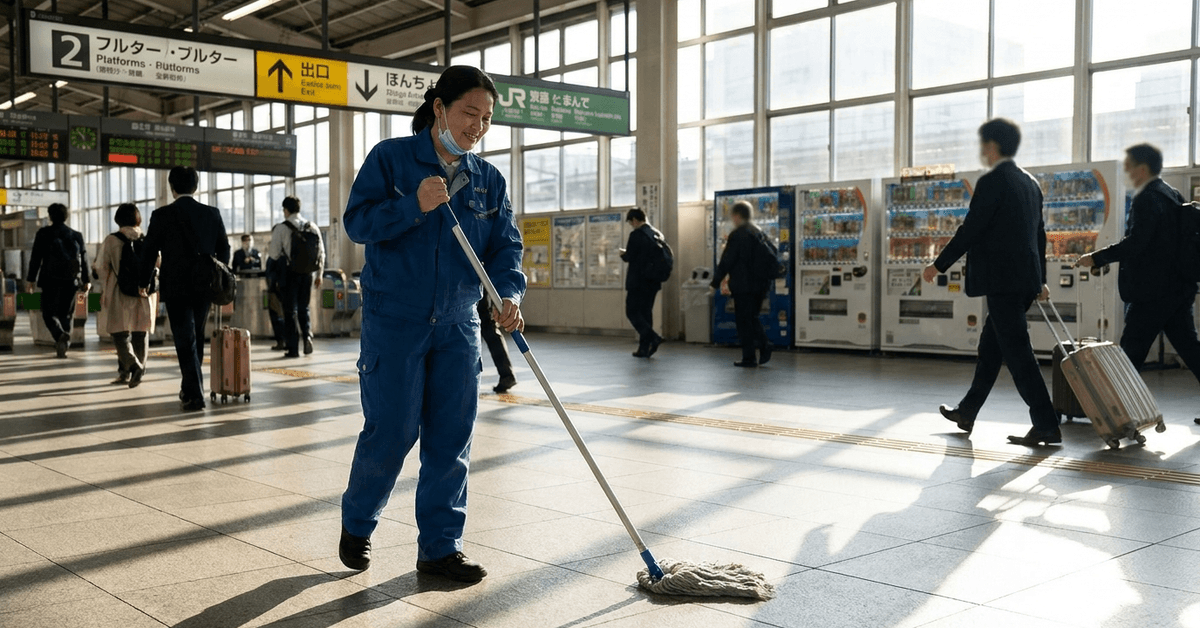
Late-night cleaning shifts, especially in commercial buildings, tend to pay 10% to 25% more. Weekend slots carry a similar bump because fewer people want them.
I would take a night shift cleaning gig at 1,100 yen over a daytime one at 1,000 yen, because Tokyo's late-night premium adds up to roughly 20,000 extra yen per month on a 20-hour weekly schedule.
Monthly Pay vs. Weekly Pay
Companies typically pay monthly. Temp agencies like Tempstaff sometimes offer weekly or semi-monthly pay cycles, though you'll need to ask during registration. Don't assume it's available.
Visa Rules That Control Your Cleaning Job Options
Your visa status decides how many hours you can work, and breaking those limits has real consequences for future renewals.
The 28-Hour Rule for Student Visas
International students on a ryugaku visa can work up to 28 hours per week during school terms. During official breaks, that limit extends to 40 hours. Going over, even by a few hours, shows up during visa renewal reviews.
Working Holiday Visas
Working holiday visa holders face fewer restrictions. They can take full-time cleaning positions and switch employers freely during their stay. The visa lasts 12 months and doesn't renew.
Spouse and Dependent Visas
Dependent visa holders need a Resource Activity Permission stamp on their residence card before taking any paid work. City hall handles the application. Without it, working is a visa violation.
Where to Search for Cleaning Jobs in Japan
The fastest approach combines online job boards with in-person visits to hotels and staffing agencies near your area.
GaijinPot Jobs, one of the largest English-language job boards in Japan, lists cleaning positions under part-time and contract categories. Indeed Japan also carries listings in both English and Japanese, with auto-translation support.
Staffing and Dispatch Agencies
Dispatch companies like Tempstaff and Pasona recruit cleaning staff during peak tourist seasons.
Some specialize in placing international residents. Registration usually requires your residence card and a basic rirekisho (the standard Japanese resume form).
These agencies handle the following for you:
- Payroll processing and tax withholding
- Placement at hotels, office buildings, and event venues
- Contract renewals and shift scheduling
Walking Into Hotels and Hospitals
This sounds old-fashioned, but it works. Hotels in tourist-heavy areas post job ads at reception desks, especially between March and May during the spring hiring push. Bring a printed rirekisho and your residence card.
I think the walk-in method at business hotels near major train stations outperforms online applications for cleaning roles, because hiring managers at those locations fill positions within 48 hours and prefer candidates who show up ready.
How the Application Process Works
The cleaning job application process in Japan follows a simpler path than most other industries. Some positions skip formal interviews entirely.
Preparing Your Rirekisho
The rirekisho is a standardized Japanese resume template. You can buy blank forms at any convenience store, or download one from the Ministry of Health, Labour and Welfare's website. Fill it out neatly by hand or print a digital version.
The format includes sections you won't see on a Western resume:
- A passport-size photo glued to the top-right corner
- Your commute time to the workplace in minutes
- A "reason for applying" box, usually two to three sentences
- Personal seal (hanko) or signature space
Interviews and Orientation
Many cleaning employers run a brief 10-minute conversation instead of a structured interview. They'll ask about your available days, commute distance, and any prior cleaning or hospitality work.
Some skip the interview step and move straight to a one-day orientation. Orientation covers equipment use, safety protocols, and building-specific rules.
Small Moves That Get You Hired Faster
Cultural expectations in Japan's service industry lean toward presentation and punctuality. Two candidates with identical availability will be separated by how they showed up to the first meeting.
Dress Neatly, Even for Manual Work
Arriving in clean, pressed clothes signals respect for the employer. This isn't about formal business attire. A clean polo and dark pants will do. Wrinkled or overly casual clothing can cost you a position that was otherwise yours.
Learn 20 Work-Specific Japanese Words
Memorize terms like houki (broom), mopu (mop), gomi (trash), and seiketsu (cleanliness). Even this small vocabulary cuts daily friction and shows effort that employers remember.
Say Yes to Unpopular Time Slots
Early morning shifts starting at 5 or 6 AM and late-night shifts after 10 PM sit open longest. Mentioning flexibility for those hours during your first conversation moves you ahead of candidates who only want daytime.
Tax and Insurance: The Part Most Foreigners Skip
Employers deduct income tax and, for full-time workers, social insurance contributions directly from your pay. You should receive itemized payslips every month.
If your annual income crosses the tax-filing threshold, you'll need to file during Japan's tax season (February 16 to March 15). Local ward offices offer free multilingual tax filing support.
| Feature | Part-Time (under 20 hrs/wk) | Full-Time (30+ hrs/wk) |
|---|---|---|
| Income Tax Withholding | Yes | Yes |
| Health Insurance | Usually not enrolled | Enrolled by employer |
| Pension Contributions | Usually not enrolled | Enrolled by employer |
| Paid Leave | Accrues after 6 months | Accrues after 6 months |
Paid leave accrual surprises many foreign workers. Even part-time cleaning staff earn paid vacation days after six continuous months under Japan's Labour Standards Act.
Questions People Ask About Cleaning Jobs in Japan
A few things come up repeatedly in forums and job boards that didn't fully fit above.
- Q: Can I get a cleaning job in Japan without speaking Japanese?
Yes, especially at international hotels and through dispatch agencies that place foreign workers. Picture-based training manuals and bilingual supervisors are common at larger companies. Expect fewer options in rural areas. - Q: Do cleaning jobs in Japan offer sponsorship for work visas?
Rarely. Cleaning positions fall under general labor, and most employers won't sponsor a work visa for them. The typical path is entering on a working holiday or student visa first, then finding cleaning work once you're already in the country. - Q: Is it possible to move from a cleaning job to a different career in Japan?
Absolutely. Many foreign workers use cleaning roles to fund language school, build a local work history, and make connections. The work history on your rirekisho counts toward future applications in hospitality, facility management, and related fields. - Q: How many hours can I realistically work cleaning in Japan?
That depends entirely on your visa. Student visa holders max out at 28 hours during term. Working holiday and spouse visa holders can take 40-hour weeks. Temp agencies sometimes split shifts across two clients to fill your schedule. - Q: Are cleaning jobs safe for women in Japan?
Japan's workplace safety standards apply equally across genders. Solo night shifts at isolated locations carry the same caution they would anywhere. Larger companies typically assign teams rather than solo workers for late-night building cleaning.
Conclusion
Cleaning work in Japan won't make you rich, but it puts money in your pocket while you build something bigger. The 28-hour visa cap matters more than the hourly rate for most foreign workers.
Grab a rirekisho template, memorize 20 Japanese words, and walk into the nearest business hotel. Steady work and a foothold in Japan's job market could be one conversation away.


