
Handling monthly bills or online shopping can feel complicated in a new country. In Japan, 7-Eleven convenience stores offer a surprisingly simple way to make payments, even without a Japanese bank account or credit card.
This guide shares practical steps for locals, tourists, and long-term expats. With hundreds of branches in Tokyo, Osaka, Sapporo, and smaller towns, finding a nearby store is easy.
Why Choose 7-Eleven for Payments?
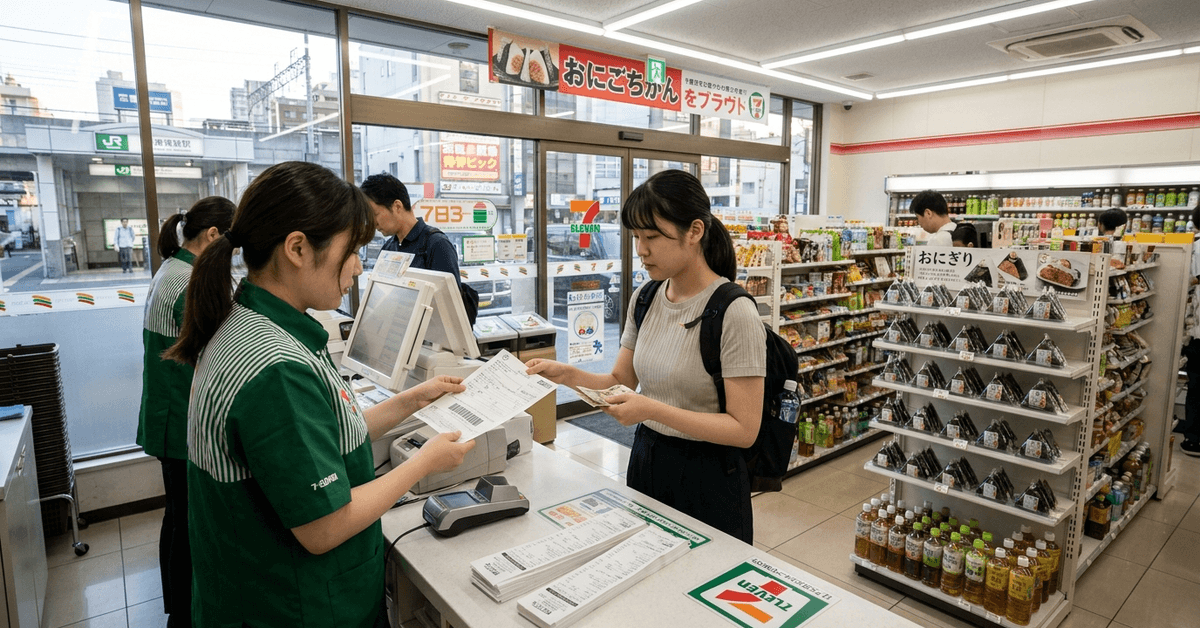
Most Japanese residents and many foreigners use 7-Eleven due to its nationwide reach and clear payment process.
Widespread Locations
Major cities like Kyoto, Fukuoka, and Nagoya have 7-Eleven stores open 24/7. Station areas and residential neighborhoods also offer easy access.
User-Friendly Machines
7-Eleven stores are equipped with the multi-function copier (マルチコピー機), making bill payment possible in several languages. This removes language barriers for non-Japanese speakers.
Safe, Reliable Transactions
Paying at 7-Eleven keeps transactions secure and generates paper receipts immediately. This helps with personal record-keeping and company reimbursements.
What Can You Pay at 7-Eleven?
Most Japanese utility companies and major online retailers integrate payment options at convenience stores.
- Electricity bills (e.g., Tokyo Electric Power — TEPCO)
- Gas bills (e.g., Osaka Gas, Tokyo Gas)
- Water supply fees
- NHK broadcasting fees
- Mobile service bills (e.g., Docomo, AU, SoftBank)
- Online orders from Rakuten, Amazon Japan, Mercari, and some foreign sites
How to Complete a Utility Bill Payment
Paying a utility bill becomes easier when you understand each step of the payment process. Preparing the correct account details and checking available payment methods beforehand can help prevent errors or delays.
1. Gather Your Bill or Payment Slip
Utility companies mail out bills monthly. Each includes a barcode at the bottom, which is required for payment. If signed up for electronic delivery, printing out the slip is necessary.
2. Visit a 7-Eleven Store
Choose any store in your area. For example, travelers in Yokohama or Sapporo will find many options near train stations and hotels.
3. Go to the Counter with Your Bill
No need to use a kiosk for basic bill payments. Present the payment slip, with the barcode facing up, directly to the cashier.
4. Confirm the Amount
The cashier scans the barcode, then tells you the total amount. Payment is accepted in cash. Some locations also accept nanaco (7-Eleven’s IC card), but cash is always certain.
5. Complete the Payment
Hand over the payment and receive two receipts. One is your proof of payment. The other is retained by the store. Keep your receipt in case your utility company requests it, especially for rental properties.
How to Pay for Online Purchases
Completing an online purchase is easier when you understand how the payment process works. Checking the payment details, available methods, and any required confirmation steps can help ensure a smoother transaction.
1. Choose ‘Convenience Store Payment’ at Checkout
On e-commerce platforms like Amazon Japan or Rakuten, select コンビニ払い (Konbini Barai) at checkout. Some international sites, such as Agoda, may also provide this option for bookings in Japan.
2. Receive a Payment Code or Slip
Once your order is completed, the seller emails a barcode or numerical code. In some cases, a PDF voucher is provided. Double-check whether the payment code is for 7-Eleven or another chain like Lawson or FamilyMart.
3. Visit the 7-Eleven Store
Bring your smartphone or printout of the payment code . If using an email voucher, have the barcode clearly visible on your screen.
4. Use the Multi-Function Copier (if Required)
Some codes need to be entered at the multi-function copier with the ‘コンビニ支払い’ (Convenience Store Payment) menu. Screens offer English support. Enter your code, print the payment slip, then bring it to the cashier.
5. Pay at the Register
Present either your phone screen, paper voucher, or slip. Settle the amount in cash. The cashier confirms and issues a receipt.
Practical Ways to Avoid Payment Issues
A smooth transaction often depends on careful preparation and accurate payment details. Checking requirements, available payment methods, and transaction information beforehand can help reduce delays, errors, or unsuccessful payments.
Cash Only Precautions
Most payments must be completed in yen cash. Carry sufficient bills and coins. ATM machines, typically near the store entrance, allow withdrawals with most international cards.
Keep Receipts Safe
If you lose your utility payment receipt, proof of payment can be difficult to retrieve. For online orders, retaining the receipt is useful in case of shipping or refund issues.
Language Assistance
Staff may not always speak English fluently. However, payment steps are routine for them. Showing the barcode and saying ‘OK?’ or ‘Payment’ is usually well understood.
Common Apps and Tools for 7-Eleven Payments
Digital tools can make everyday 7-Eleven payments faster and easier to manage. Depending on the country and store, supported apps and payment services may offer convenient ways to pay, track transactions, or access available features.
nanaco Card
The nanaco Card is a rechargeable IC card specific to 7-Eleven. Pre-loading the card with yen allows for cashless payments, though not every bill or online purchase supports it.
7-Eleven ATM
For foreigners arriving with only a debit card, 7-Eleven ATMs accept Visa, MasterCard, and some UnionPay cards. ATMs are multilingual, supporting both Japanese and English interfaces.
Mobile Payment Apps
While PayPay, LINE Pay, and Rakuten Pay are popular in Japan, cash remains the universal standard for utility bills at 7-Eleven. Some select online purchases may allow mobile wallet payment.
Understanding Payment Limits and Security Risks
Convenient payment options can still come with important limits and security risks. Understanding transaction restrictions, fees, refund policies, and basic safety practices can help users avoid unexpected problems and protect their payment information.
Cut-Off Times
Utility bills and shopping payment codes have expiration dates. Missed deadlines may require re-issuing the slip or contacting the utility provider directly.
Maximum Payment Amounts
Some branches have a payment ceiling, frequently set at 300,000 yen per transaction. Large purchases or corporate bills may need to be split across visits.
Privacy and Data Protection
Bills generally do not require showing identification. However, cashiers do not record your name when paying standard household bills or online purchases.
Comparison: 7-Eleven vs Other Convenience Stores
Convenience stores can differ significantly in payment options, services, fees, and accessibility. Comparing 7-Eleven with other major chains can help customers understand which option better matches their everyday payment and shopping needs.
| Feature | 7-Eleven | Lawson | FamilyMart |
|---|---|---|---|
| Network Coverage | Widest in Japan | Extensive | Extensive |
| English Support | Common at machines | Variable | Variable |
| IC Card Payments | nanaco | Ponta, iD | WAON, Rakuten Edy |
| 24/7 Operation | Yes | Many stores | Many stores |
Conclusion
7-Eleven stores in Japan can provide convenient payment options for eligible utility bills and online purchases.
Understanding accepted methods, payment codes, limits, and deadlines can help prevent transaction issues. Keeping receipts and verifying payment details can make everyday payments easier to manage.


