
Deliveroo remains one of the most recognized delivery platforms across Italy. For many, becoming a Deliveroo rider offers a way to earn money while keeping their schedule flexible.
This guide unpacks the process to help readers see what might suit their own lifestyles, especially if they’re exploring supplementary incomes or transitioning work habits post-pandemic.
Why Choose Deliveroo in Italy?
It’s not just about the growing need for food delivery . Living in cities like Milan, Rome, or Florence, people notice the demand for quick meals at home. Deliveroo partners with a wide network of local restaurants that serve thousands of customers daily, giving riders steady orders.
Even those in smaller towns see opportunities, with more restaurants joining the app each month. Perhaps it’s the convenience, or maybe Italian families are busier now. Either way, Deliveroo Italy continues to expand, which could be promising for new riders.
Key Benefits for New Riders
The main attraction seems pretty clear—earning extra cash when needed. Many riders enjoy setting their own hours. There are no obligatory shifts. Students, part-time workers, or those between jobs may find this particularly attractive.
Another notable advantage is familiarity. Italians increasingly rely on food delivery, and Deliveroo’s brand is often recognized from city scooters to TV ads. The onboarding process feels straightforward and digital.
Requirements for Becoming a Deliveroo Rider in Italy
Joining doesn’t require advanced skills, but readers should know a few basics. Reliable transport is essential—bicycle, scooter, or even a car. For many, cycling is enough, though in less central zones a scooter can be helpful.
Legal age matters. Applicants should be at least 18 years old. Residency documents and a codice fiscale (tax ID) are needed for contracts. Deliveroo asks to see valid ID and, for motor vehicles, a driving license.
Applicants need a smartphone with mobile internet—Android or iOS works fine. Orders and directions come through the Deliveroo app, so checking for updates is part of the daily work.
Step-by-Step: How to Register as a Deliveroo Rider
Online Application
New riders can start by visiting the official Deliveroo application page. The online process requests basic details—name, email, city, and vehicle type.
Documentation Upload
After submitting details, applicants typically upload ID, a selfie for verification, and vehicle documents if needed. For bikes, no extra license is necessary. Document checks can take a day or two but sometimes a bit longer.
Contract Review and Digital Signature
Once documents are approved, Deliveroo sends a digital contract to review. Some may pause here to read the conditions carefully since gig contracts differ from permanent jobs. After signing, onboarding can progress quickly.
App Setup and Equipment
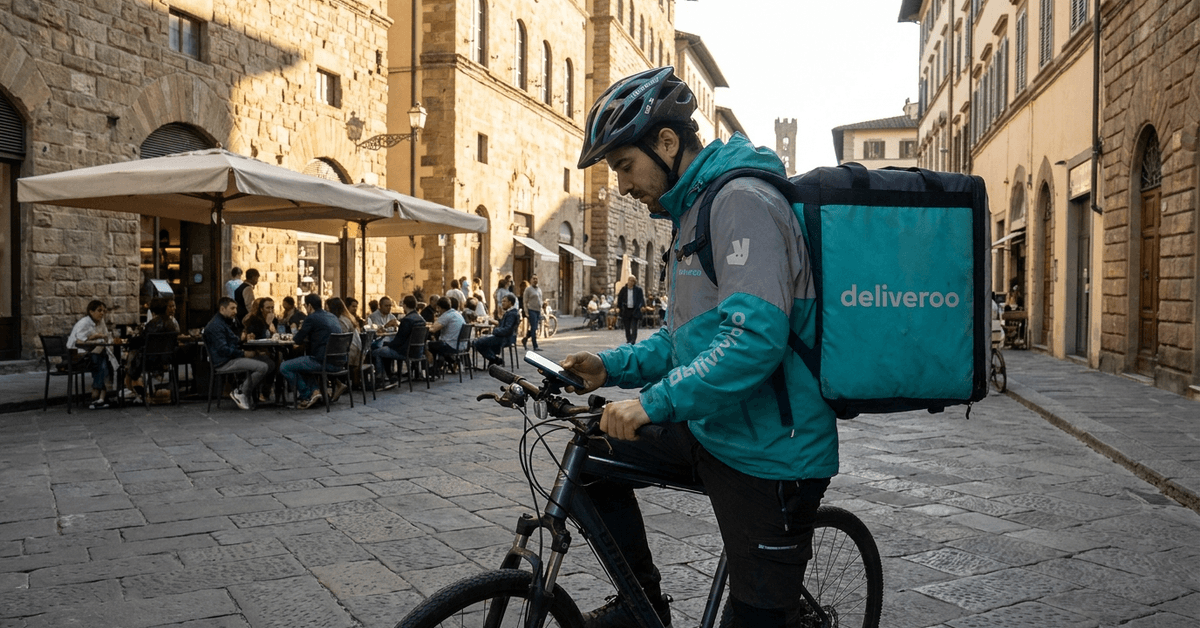
The Deliveroo app is the central work tool. After contract approval, login credentials arrive by email. Riders can download the app and start using the features. Deliveroo often provides safety gear, like branded backpacks and jackets, either at collection points or by mail.
Practical Tips for a Smooth Start in Italy
Choosing the Right Vehicle
Bikes work well in city centers—traffic is less of a headache, and parking isn’t troublesome. Scooters or cars might suit those delivering across longer distances or in suburban areas. Sometimes, the choice depends mostly on local infrastructure.
Navigating Peak Times
Orders tend to spike around lunch (12–2 pm) and dinner (7–10 pm). Some readers note that working weekends can bring higher earnings as more customers order in. There isn’t an exact formula, but experimenting with different shifts helps refine routines over time.
Managing Income and Tax Responsibilities
Deliveroo pays out weekly directly to riders’ bank accounts. Italy’s tax rules apply; most new riders should be aware that earnings count as self-employed income. Deliveroo often suggests consulting a commercialista to avoid surprises at the end of the tax year.
What You’ll Find in the Rider App
Order Management
The app allows riders to accept or decline deliveries. Route info updates in real-time, and payment details for each delivery appear on the screen. There are simple maps, but most riders use their own preferred navigation apps too.
Support and Safety
If issues come up during a shift—say, an address problem—the in-app support and FAQ can resolve most questions. Some riders have used the chat service when something didn’t go as planned, but mostly, things run smoothly.
Rating and Feedback
Customer feedback helps Deliveroo monitor quality. Riders can track their performance stats directly within the app. High ratings may influence access to incentives or priority orders.
Popular Cities for Deliveroo Riders in Italy
Large urban centers like Milan, Rome, Bologna, Turin, and Naples offer the highest concentration of orders. Still, Deliveroo’s coverage is expanding across mid-sized towns and touristic regions. Even in areas where launches are recent, riders tend to report demand that keeps them busy, at least during meal times.
Legal and Safety Considerations in Italy
Italian law has been adjusting to platform work. Riders are generally freelancers (autonomi), not salaried staff. This affects insurance, tax, and some social guarantees. Deliveroo provides basic insurance, but some riders choose additional personal coverage for health or accidents.
Employing visible safety gear, riding cautiously, and respecting road rules are part of the job. Italian cities vary in their infrastructure, which sometimes affects delivery times—unexpected traffic, weather, or roadworks aren’t uncommon.
Alternative Delivery Platforms to Consider
While Deliveroo is well-known, alternatives like Glovo, Just Eat, and Uber Eats operate across many Italian cities. Some riders register with more than one to increase their income options, balancing shifts between competing platforms. For a direct comparison, researching platforms individually is suggested before committing to one.
Expected Earnings and Earning Potential
Income per hour can vary. Riders report averages from €7 to €15, factoring in peak times or city demand. Deliveroo’s incentives —like bonuses at busy hours or referral schemes—add to these amounts but may shift by region or month.
Costs—such as fuel, gear maintenance, or phone data—need to be considered. Still, many find the model fits if aiming for supplemental or flexible earnings, rather than fixed salaries.
How to Apply and Start Delivering with Deliveroo
Those ready to begin can start by visiting Deliveroo’s official Italian rider application page. This step will outline everything needed to get started officially and securely through the platform.
Final Thoughts: Are Deliveroo Gigs in Italy Worth Considering?
Delivering for Deliveroo in Italy isn’t a one-size-fits-all experience. For individuals seeking flexibility, or a practical way to make use of idle hours, it certainly presents a valid opportunity.
The simplicity of onboarding is appealing, and the earning potential is straightforward, while expectations remain realistic. Not everyone finds platform work perfect, but for thousands, it continues to offer both independence and needed extra income.
Perhaps that’s the benefit—having something that adapts as personal circumstances shift. To learn more or apply directly, visit Deliveroo’s official application portal for Italy.


