Food delivery roles continue to attract job seekers in France looking for flexible employment and additional income. Accessible application processes and opportunities in major cities make courier work appealing.
This guide explains the requirements, registration steps, legal obligations, and practical considerations for becoming a food delivery courier in France.
Whether you are a student, changing careers, or seeking supplementary income, understanding the process can help you prepare for available opportunities.
Why Food Delivery Jobs Remain Popular in France
Food delivery services provide opportunities for individuals seeking flexible working arrangements. Urban populations, restaurant partnerships, and mobile ordering platforms continue to support courier activity.
Unlike traditional employment, independent delivery work often allows couriers to choose when they become available.
This flexibility benefits people balancing education, family responsibilities, or other professional commitments. However, delivery demand varies depending on location, weather, and customer activity.
Cities such as Paris, Lyon, and Marseille offer established delivery markets, although competition and platform availability can affect opportunities.
Basic Requirements for Becoming a Courier in France
Most delivery platforms establish specific eligibility requirements before accepting new couriers. Applicants should understand these conditions before beginning registration.
Common requirements include:
Minimum age: Applicants must generally be at least 18 years old.
Work authorization: Candidates need permission to work independently in France.
Smartphone: A compatible device with reliable internet access is essential.
Delivery vehicle: A bicycle, electric bicycle, or approved motorized vehicle.
Identification: A valid identity document or residence permit.
Business registration: Proof of self-employed status when required.
Certain motorized delivery activities involve additional licensing, insurance, and transport authorization requirements.
Platforms may also request a bank account, identification photographs, and proof of professional registration.
Preparing these documents beforehand can reduce registration delays and prevent unnecessary complications.
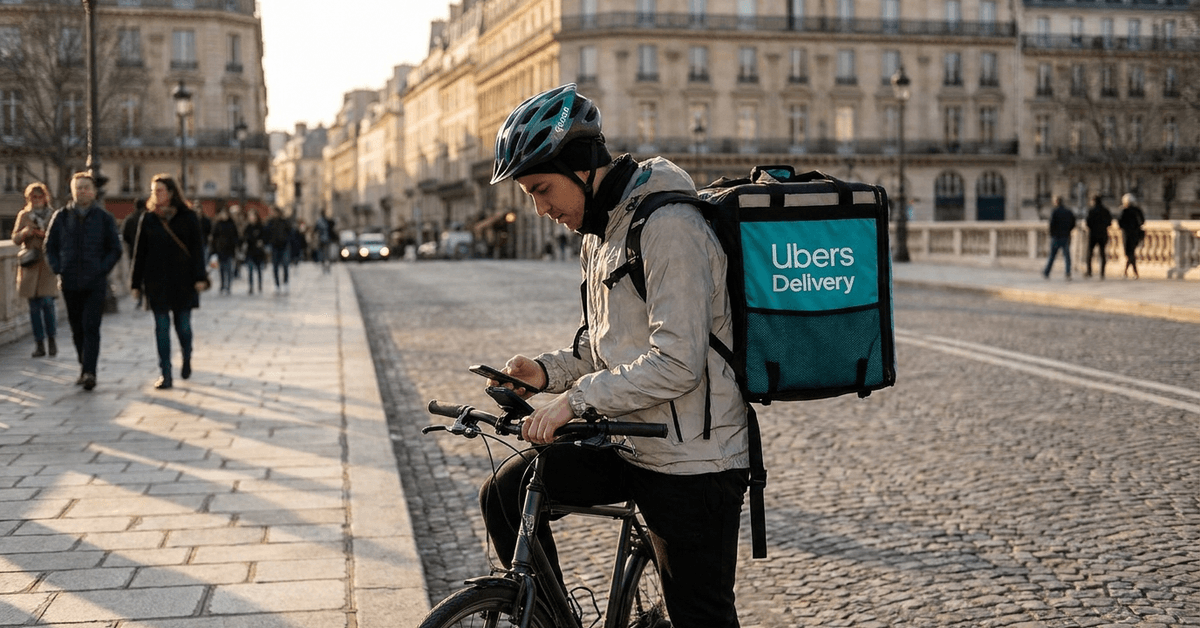
Top Food Delivery Platforms to Explore in France
Several established companies offer courier opportunities in the French delivery market. Their availability, registration procedures, and compensation structures differ.
Uber Eats
Uber Eats operates across numerous French cities and offers app-based delivery opportunities.
Applicants can register online, upload identification documents, and complete the necessary verification procedures. Available delivery zones and onboarding requirements depend on the applicant's location.
Deliveroo
Deliveroo provides opportunities for independent couriers using approved bicycles and scooters.
The platform offers flexible scheduling, order-based payments, and application support. Registration requires appropriate documentation and compliance with French self-employment regulations.
Stuart
Stuart specializes in last-mile logistics and urban delivery services, including deliveries for businesses and retailers.
Applicants should check its current recruitment arrangements, geographical coverage, and available courier partnerships before registering.
Comparing these platforms helps candidates identify suitable delivery opportunities based on their location, transportation, and availability.
Application Steps for Food Delivery Jobs in France
Applying for delivery work usually involves several online procedures. Following each step carefully helps applicants avoid incomplete submissions.
1. Collect Required Documents
Prepare your identity card, passport, residence permit when applicable, and proof of self-employment.
Applicants using motorized vehicles may need additional documentation, including insurance certificates and appropriate driving or transport authorization.
Keep clear digital copies available for uploading.
2. Register on the Official Website
Visit your preferred delivery platform's official registration website.
For example, applicants can begin through the Uber Eats courier registration page.
Complete the requested personal information accurately and select your preferred delivery location.
3. Upload Documents and Complete Your Profile
Applicants typically provide contact information, identification, banking details, and business registration documents.
Some platforms request a profile photograph and information about the delivery vehicle.
Ensure submitted documents are readable, valid, and consistent with your registration details.
4. Complete Verification and Onboarding
Platforms review submitted information before approving courier accounts.
Depending on the company, applicants may receive instructions covering application features, delivery procedures, and road safety practices.
Verification times vary, and registration does not guarantee immediate activation.
5. Begin Accepting Deliveries
Once approved, couriers can access their platform's application and review available delivery requests.
The application generally displays pickup locations, delivery destinations, and order information.
Couriers should understand the payment structure and estimated travel requirements before accepting assignments.
Legal Requirements and Tax Considerations in France
Understanding French regulations is essential for independent delivery workers. Legal registration and financial reporting responsibilities should be considered before beginning work.
Auto-Entrepreneur Status (Micro-Entrepreneur)
Many independent couriers operate under the micro-entrepreneur system, which provides a simplified framework for small businesses.
Business creation is handled through France's official registration procedures, while URSSAF manages relevant social contribution declarations.
Applicants can consult the official URSSAF website for information about their obligations.
Foreign applicants must verify that their residence status permits self-employed commercial activity.
Fiscal Obligations
Independent couriers generally need to declare their turnover and pay applicable social contributions.
Income tax treatment depends on their business classification, earnings, and individual circumstances.
Keeping accurate records of payments, professional expenses, and completed deliveries supports financial organization.
Couriers should also investigate insurance requirements and regulations affecting motorized commercial deliveries.
Benefits and Challenges to Be Aware Of
Delivery work provides flexibility but also involves financial and practical challenges. Understanding both sides helps candidates establish realistic expectations.
Flexible Work Patterns
Couriers can often schedule their availability around personal responsibilities.
However, order availability is not guaranteed, and earnings may change significantly between working periods.
Platform Incentives
Some companies offer additional payments during busy periods or promotional campaigns.
These incentives vary and should not be considered guaranteed income.
Physical Demands
Cycling and completing deliveries can require considerable physical effort.
Traffic congestion, adverse weather, and navigating unfamiliar neighborhoods create additional challenges.
Couriers should prioritize protective equipment, vehicle maintenance, and responsible road behavior.
Earnings and Operating Expenses
Delivery earnings depend on completed orders, working hours, demand, and platform payment arrangements.
Independent workers must also consider operating expenses, including transportation, maintenance, insurance, and social contributions.
Comparing gross revenue with actual expenses provides a more accurate understanding of potential income.
Tips for Smoother Applications and Successful Deliveries
Preparing properly can make registration and daily courier activities more manageable. These practical recommendations help applicants understand their responsibilities.
Verify requirements: Check each platform's latest eligibility conditions.
Prepare documents: Keep identification and registration records updated.
Compare opportunities: Review delivery zones, compensation, and platform conditions.
Follow safety procedures: Use suitable equipment and comply with traffic regulations.
Monitor expenses: Record earnings, maintenance costs, and professional contributions.
Plan working hours: Consider local demand and personal availability.
Maintain communication: Follow platform instructions when collecting and delivering orders.
Couriers should also regularly review official platform announcements, as operating conditions and registration procedures may change.
Conclusion: Food Delivery Jobs in France—Next Steps
Starting a food delivery career in France requires proper documentation, legal registration, and an understanding of platform expectations.
Although flexible schedules appeal to many applicants, earnings depend on demand, expenses, and individual circumstances.
Exploring official platforms, including Uber Eats and Deliveroo, provides a practical starting point for identifying current opportunities.
With careful preparation and realistic expectations, applicants can make informed decisions about food delivery work in France.