
A food delivery job in Europe pays anywhere from €8 to €15 per hour after expenses, depending on your city and platform. That range matters more than the signup process.
The part that trips up new couriers is rarely the application. It's the self-employment tax registration that nobody explains until your first payout gets withheld.
This article is for anyone outside the EU or new to gig work who wants to start delivering food in a European city within the next few weeks.
How Much Do Food Delivery Drivers Make in Europe?
Food delivery couriers in Europe typically earn between €10 and €18 per hour gross, but net pay after fuel, maintenance, and taxes drops that figure by 20% to 40%. The gap between gross and net is where most new drivers get surprised.
I would skip the earnings calculators on platform websites. Uber Eats, Deliveroo, and Glovo all advertise hourly ranges that assume peak-hour work with zero downtime.
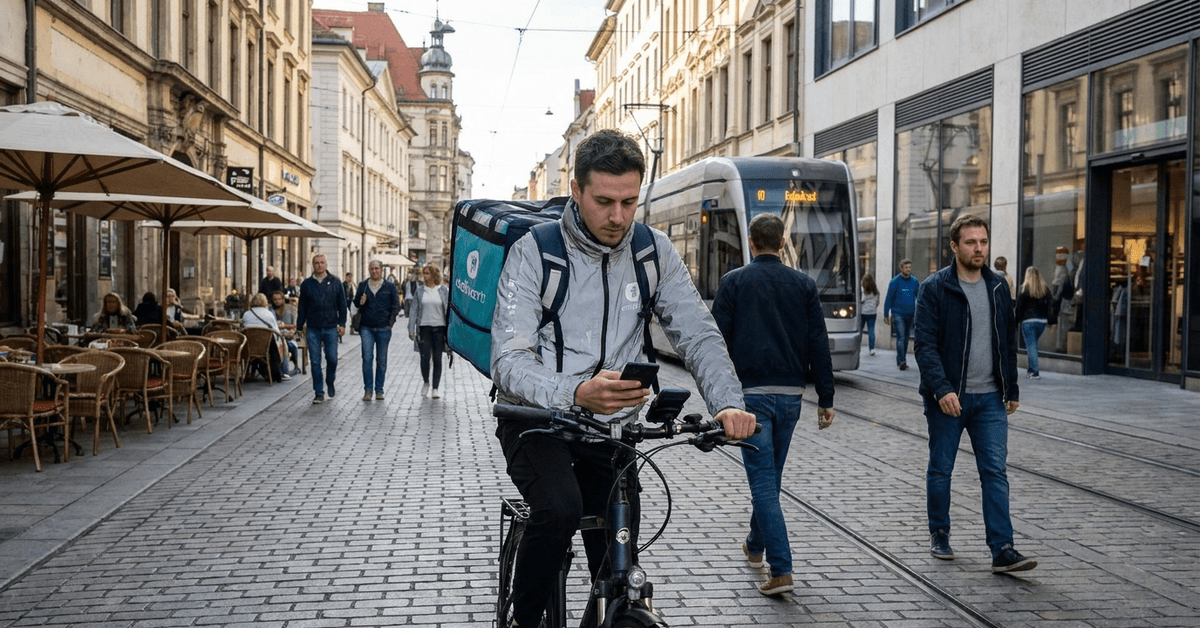
Real shifts include waiting at restaurants, slow Tuesday afternoons, and dead zones between lunch and dinner.
Peak Hours vs. Dead Hours
Lunch runs from roughly 11:30 to 14:00. Dinner picks up around 18:00 to 21:30. Earnings during these windows can double what you make at 15:00 on a Wednesday.
The math changes on weekends. Friday and Saturday evenings are the highest-volume slots across most European cities. Sunday lunch also tends to spike.
The Expense Problem Nobody Calculates First
Fuel, phone data, tire wear, and insurance eat into your gross pay fast. A bicycle courier avoids fuel costs but deals with physical fatigue and slower delivery times.
I think the biggest mistake new couriers make is ignoring quarterly tax obligations. Platforms like Uber Eats classify you as self-employed, so no taxes get withheld from your payouts.
That 20% to 30% you owe the government sits in your bank account looking like profit until the bill arrives.
Which Delivery Platforms Hire in Europe Right Now?
Five platforms control most of the European food delivery market in 2026: Uber Eats, Just Eat, Deliveroo, Glovo, and Wolt. Each one operates in different countries, and some have merged or exited markets since 2024.
Uber Eats
Uber Eats is available across most Western European countries. The signup process runs through the Uber app, and onboarding usually takes three to seven days depending on background check speed.
Deliveroo
Deliveroo operates in the UK, Ireland, France, Belgium, and Italy. It has a reputation for shorter delivery zones, which keeps cycling couriers competitive.
Glovo
Glovo is strongest in Spain, Portugal, Italy, and several Eastern European markets. It delivers groceries and packages too, so couriers can pick up non-food orders during slow restaurant hours.
Wolt
Wolt expanded quickly through Scandinavia and the Baltics after its acquisition by DoorDash. It now covers parts of Germany, Poland, and the Czech Republic too.
Just Eat
Just Eat has deep roots in the UK, Spain, Denmark, and the Netherlands. Some of its markets use employed drivers rather than independent contractors. That distinction changes your tax situation entirely.
Food Delivery Job Requirements Across Europe
The baseline requirements are consistent across platforms and countries. Applicants need to be at least 18, hold legal work authorization, own a smartphone, and have access to a bicycle, scooter, or car.
A clean criminal record check applies in the UK and Germany. Other countries may skip this step or handle it through local authorities rather than the platform.
Documents you will need for most applications:
- Government-issued ID or passport
- Proof of right to work (EU passport, residence permit, or work visa)
- Vehicle registration or proof of bicycle ownership
- Phone number and active email address
- Tax identification number for your country of residence
Some platforms also require public liability insurance or vehicle-specific coverage. This varies by country. France, for instance, requires couriers to carry responsabilité civile professionnelle.
A second set of documents may come up during onboarding:
- Proof of address dated within the last three months
- Bank account details for payout setup
- A selfie matching your ID photo
- Completion certificate from the platform's training module
Step-by-Step Application Process for Food Delivery Jobs
The application flow is nearly identical across Uber Eats, Deliveroo, Glovo, and Wolt. Signing up takes 10 to 20 minutes. Getting activated takes 3 to 14 days.
Register on the Platform's Website or App
Go directly to the courier signup page. Fill in your name, phone number, email, and city. Select your vehicle type.
Upload Your Documents
Scan or photograph your ID, work permit, and vehicle proof. Blurry uploads get rejected. Use good lighting and a flat surface.
Complete the Background Check
Platforms in the UK and Germany run criminal background checks through third-party services. This step alone can add five to ten business days.
Finish the Online Training
Most platforms require a short video course or quiz covering delivery etiquette, app navigation, and food safety rules. Glovo and Wolt both use in-app training modules that take about 15 minutes.
Activate Your Account and Start Delivering
Once your documents clear and training finishes, the app switches your status to active. You can accept your first order immediately.
Tax Registration and Legal Status for Gig Couriers
Food delivery work in Europe is classified as self-employment in most countries. That means you register as a freelancer, file your own taxes, and handle your own social contributions.
Country-specific registration looks like this:
| Country | Registration Body | Tax Filing Frequency |
|---|---|---|
| France | URSSAF (auto-entrepreneur) | Monthly or quarterly |
| Germany | Finanzamt (Gewerbe registration) | Annually with quarterly prepayments |
| Spain | Agencia Tributaria (autónomo) | Quarterly |
| UK | HMRC (Self Assessment) | Annually by January 31 |
Spain's autónomo flat-rate scheme charges a reduced social security fee of €80/month for the first 12 months of registration. That fee jumps after the introductory period, so plan accordingly.
I would not wait until tax season to sort this out. Registering before your first payout avoids fines and keeps your account in good standing. Spain's Agencia Tributaria has an English-language portal that walks through autónomo registration step by step.
Who Should and Shouldn't Take a Food Delivery Job
Delivery work fits students, recent arrivals to a new city, and anyone who needs income without a fixed schedule. It does not fit people who need stable monthly earnings or employer-provided benefits.
Good Fit
Part-time workers who want to fill gaps around a class schedule or another job do well. The ability to log on and off at will means you control your hours.
Bad Fit
Anyone relying on delivery income as a sole salary may struggle with earnings volatility. Rainy Tuesdays pay differently than sunny Saturdays. Holidays can go either way.
I think the popular advice to "sign up for multiple platforms at once" is overrated for brand-new couriers. Learning one app's interface, payment cycle, and delivery zones takes a solid two weeks.
Splitting your attention across Uber Eats, Glovo, and Wolt simultaneously means you learn none of them well. Get comfortable on one platform first, then add a second after your first month.
Questions People Ask About Food Delivery Jobs in Europe
These are the searches that keep coming up around this topic.
- Q: Can I do food delivery in Europe on a tourist visa?
No. Tourist visas do not grant work authorization in any EU country. You need a residence permit, work visa, or EU/EEA citizenship to legally accept paid gig work. Platforms verify this during signup. - Q: Do food delivery platforms provide bikes or scooters?
Most do not. Couriers supply their own vehicle. Some cities have rental partnerships, but the monthly cost eats into your earnings. Owning a used bicycle is the cheapest entry point. - Q: How fast can I start earning after signing up?
The fastest timeline is about three days if your documents are clean and no background check applies. The UK and Germany tend to take closer to two weeks because of mandatory criminal record screening. - Q: Do I need to speak the local language to deliver food?
The app handles most communication. Basic phrases help when picking up orders, but fluency is not required. English-speaking couriers work in most major European cities without language barriers. - Q: Is food delivery worth it as a full-time job in Europe?
It can cover living expenses in lower-cost cities if you work peak hours consistently. High-cost cities like Paris or Amsterdam make it harder to break even after rent and expenses. Treat it as flexible income, not a career salary.
Conclusion
The European food delivery market still has room for new couriers, especially during evening and weekend peaks.
Tax registration is the step most people delay and later regret, so handle it first. Your city, vehicle type, and platform choice shape your earnings more than effort alone. Start with one app, learn the zones, and expand from there.


