Interlibrary Loan (ILL) lets you access books, articles, theses, and multimedia held at other libraries worldwide when your local catalog comes up short.
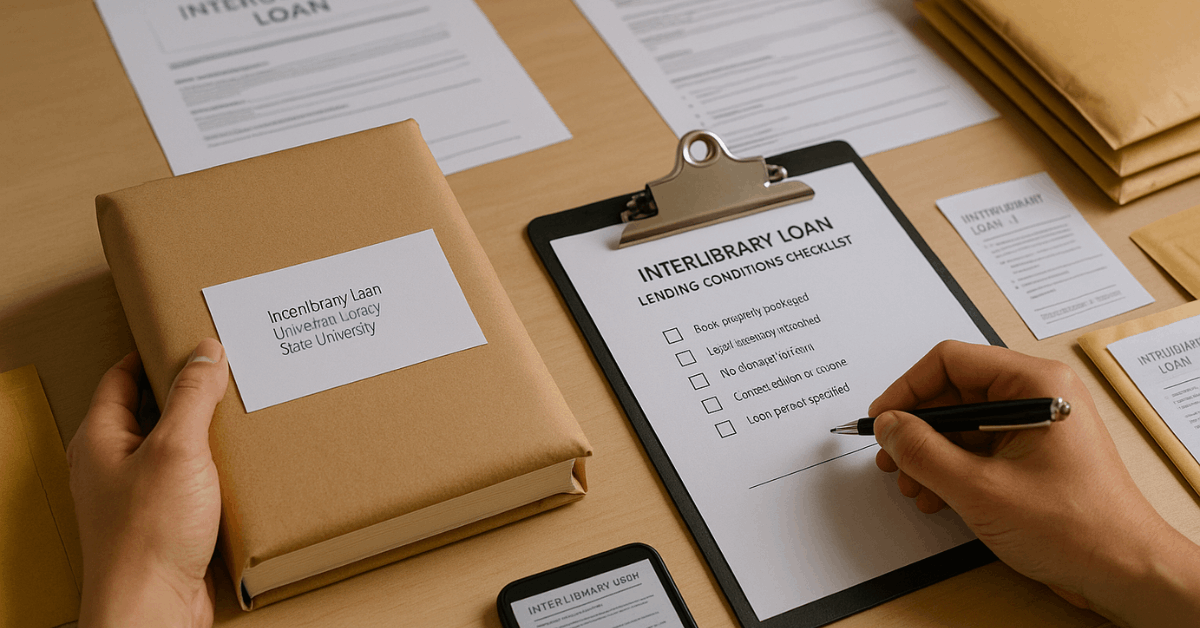
You place a request through your library, a partner library supplies the item, and you use it under the lender’s rules for a defined period.
What Interlibrary Loan Is
You use ILL to reach beyond a single collection and borrow or obtain copies that support study, research, or personal learning.
Requests can include scholarly articles, book chapters, dissertations, conference papers, audiovisual items, and specialty formats, subject to each lender’s policy.
Libraries participate to widen access efficiently and equitably, ensuring you can consult materials that are rare, out of print, or simply unavailable locally.
How the Online ILL Process Works
Need an item your library does not own today? Follow this flow so staff can route your request quickly and accurately.
- Submit a complete request through the catalog or ILL platform (title, author, edition, pages, date, ISBN/ISSN, or DOI).
- Your library confirms the item is not locally available or already licensed in digital form.
- Staff search union catalogs and networks such as OCLC WorldShare or ILLiad to find potential lenders.
- A standardized loan or copy request goes to a lending library with your delivery and cost preferences.
- The lender approves when policy and availability allow, then ships the physical item or delivers a secure digital copy.
- You collect or access the item after notification; delivery time varies by distance, format, and workload.
- You follow the lender’s conditions on due dates, renewals, copying limits, and in-library use where required.
- You return the item to your library on time so it can be shipped back and the transaction closed.
Who Can Use ILL?
Libraries worldwide set their own rules, yet patterns are consistent. Registered public library patrons in good standing typically qualify once a card is active and major fines are cleared.
Students at accredited institutions use campus ILL portals, often with higher quotas at graduate and doctoral levels. Faculty and academic staff request materials for teaching or research timelines and may receive priority where policy allows.
Independent researchers access ILL through public or research libraries by holding a valid membership, while professionals in fields such as law, medicine, or engineering often work through special or corporate libraries that participate in resource-sharing agreements.
Conditions
Common conditions and limits include age restrictions for certain card types, geographic participation tied to regional or national consortia, and caps on concurrent requests to keep service fair during peaks.
Good standing matters because unresolved overdues or prior ILL issues can pause new requests until accounts are cleared.
How Libraries Decide Which Requests to Fulfill
Some requests move fast while others stall; in turn, libraries weigh clear factors before saying yes.
Lender policies
You will see exclusions for new high-demand titles, fragile or rare items, and non-circulating reference works to protect local access and preservation.
Availability and demand
Scarce materials or items in heavy local use are harder to secure, especially when few copies exist or exam periods spike demand.
Cost and budget
Shipping, handling, and copyright royalties must fit cost limits. Your library may ask you to pre-approve fees for specific requests.
Purpose and status
Instruction, publication, or clinical needs can receive priority within policy, while recreational reading remains supported when capacity allows.
Copyright and licensing
Article and chapter requests must comply with fair use and license terms that limit what can be copied or scanned per title and time period.
Consortial agreements
Preferred regional, national, or international networks are used first to reduce costs and speed delivery through established workflows.
Condition and format
Damaged, unique, or sensitive formats such as microfilm, manuscripts, or full journal issues face restrictions because replacement risk is high.
Time sensitivity
Turnaround estimates are matched to your deadlines; staff may propose alternate editions, formats, or sources when time is tight.
Borrower history
Consistent late returns, unpaid charges, or exceeding quotas can limit new requests until issues are resolved.
Fees and Possible Costs
Unexpected charges can derail your plan; as a result, review likely costs and set a limit your library may apply on your behalf.
| Fee type | When it appears | How you manage it |
| Shipping/handling | Physical loans, especially cross-border | Approve a maximum cost in your request |
| Document delivery | Scans of articles or chapters | Ask for page ranges to reduce fees |
| Lender transaction fee | Set by some suppliers | Request alternatives inside consortia first |
| Administrative charge | Applied by some libraries | Confirm local policy before submitting |
| Overdue/loss/damage | Late, lost, or damaged items | Return early when finished and report issues immediately |
Many libraries keep ILL free or low-cost. Staff usually disclose any charge and pause the request until you consent.
Benefits of Using ILL
Large collections still miss essentials; that way, ILL fills gaps without forcing you to buy or subscribe.
Wider reach
You gain access to holdings across libraries worldwide, including dissertations, conference papers, data-heavy reports, and niche monographs.
Cost efficiency
You avoid purchasing rarely used titles while libraries minimize duplication through coordinated sharing.
Time savings
Your library handles searching, verification, and logistics, leaving you focused on analysis rather than procurement.
Access to rare items
You can consult out-of-print works or legacy media through partners that maintain archival holdings under controlled conditions.
Convenient delivery
Secure electronic delivery brings articles and chapters to your inbox quickly when licensing permits.
Academic collaboration
You benefit from a network designed to support coursework, thesis writing, grant work, and publication schedules across institutions.
How ILL Supports Academic Research and Study
Tight deadlines and specialized topics demand thorough sourcing worldwide; therefore, ILL strengthens the depth and quality of your work.
Comprehensive reviews
You complete literature scans that extend beyond local subscriptions, including journals from smaller societies and proceedings.
Interdisciplinary depth
You pull sources outside your home field to test methods, compare results, and strengthen arguments.
Budget bridge
You borrow selectively rather than requesting permanent purchases during short-term projects.
Rapid article supply
You receive compliant scans for specific page ranges fast enough to meet teaching or submission milestones.
Evidence quality
You cite primary sources and specialized monographs that elevate rigor and replicability.
Challenges Libraries Manage
Service quality depends on practical constraints; consequently, build realistic timelines and remain flexible.
Scarcity and demand
New releases, single-copy titles, and heavily used items are difficult to lend without affecting local service levels.
Budget pressure
Postage, customs, software, and royalties add up, especially for international loans that travel multiple borders.
Staffing and workflow
Peaks around academic calendars can slow processing, particularly where small teams manage multiple services.
Technology alignment
ILL platforms must integrate with local systems; upgrades and training cycles occasionally impact turnaround.
Copyright limits
Fair-use thresholds and license clauses cap the number of pages or chapters that can be supplied per request.
Transit risk
Loss or damage in shipment is rare yet costly, so packaging, tracking, and careful handling are enforced.
Communication
Clear updates on status, alternatives, and due dates prevent surprises and protect your borrowing privileges.
Common Misconceptions, Corrected
You might assume ILL is only for books, yet articles, chapters, theses, and media are routinely supplied within policy. You may expect every request to succeed; however, lender restrictions and scarcity still block some items. In such cases, staff will propose alternatives when possible.
You might worry that costs are always high, yet many libraries waive or minimize fees and seek free partners first.
You may think ILL takes too long, yet digital copies often arrive within days, while physical copies depend on distance and workload. You may believe only large libraries participate, yet small and rural libraries join consortia that extend access worldwide.
Practical Tips That Speed Approvals
Small adjustments improve outcomes; in turn, your requests move faster and cost less. Provide precise citations, including pages and identifiers. State a real deadline so staff can choose lenders that meet it.
Approve a reasonable cost ceiling when your library allows pass-through fees. Accept alternate editions or formats when your purpose does not require a strict match. Return items early once finished to keep your account in excellent standing.
Conclusion
You can reach specialized materials worldwide through ILL when you submit complete citations, accept practical alternatives, follow lender rules, and plan for modest costs that staff will disclose in advance.