Curious about how to deliver with Uber Eats in the Netherlands ? This guide provides an up-to-date overview on what’s needed, who’s eligible, and what you might expect.
For many in Dutch cities, gig courier work can be a flexible option, offering an opportunity to earn on your own schedule.
This article is especially useful for anyone considering additional income or a side job that fits around studies, childcare, or other work.
Why Consider Uber Eats Delivery Work in the Netherlands?
The gig economy in the Netherlands is growing. More people are turning to platforms like Uber Eats because of its operational presence in cities like Amsterdam, Rotterdam, Utrecht, and The Hague.
It’s become an appealing route for those seeking autonomy and flexible earning potential—personally, I’ve seen friends appreciate the chance to choose their hours.
There’s also relatively low entry requirements and no Dutch language fluency is mandatory, which widens access.
Who Can Deliver with Uber Eats? Eligibility Requirements
To become a courier for Uber Eats Netherlands , applicants need to meet specific conditions. The requirements aren’t complex, but they are enforced carefully:
Minimum Age Condition
The minimum age to deliver is 18. You’ll need a valid ID or passport for verification.
Strict checks exist—I remember a friend who tried to apply at 17, only to be declined. It was a disappointment, though rules are clear for legal reasons.
Valid Work Authorization
Anyone applying must have the legal right to work in the Netherlands. This includes Dutch citizens, EU/EEA nationals, and non-EU/EEA residents with correct permits.
Student visas, for example, may allow work but with specific hourly restrictions, so it’s wise to double-check your own situation.
Approved Delivery Vehicle
Uber Eats accepts different modes of delivery:
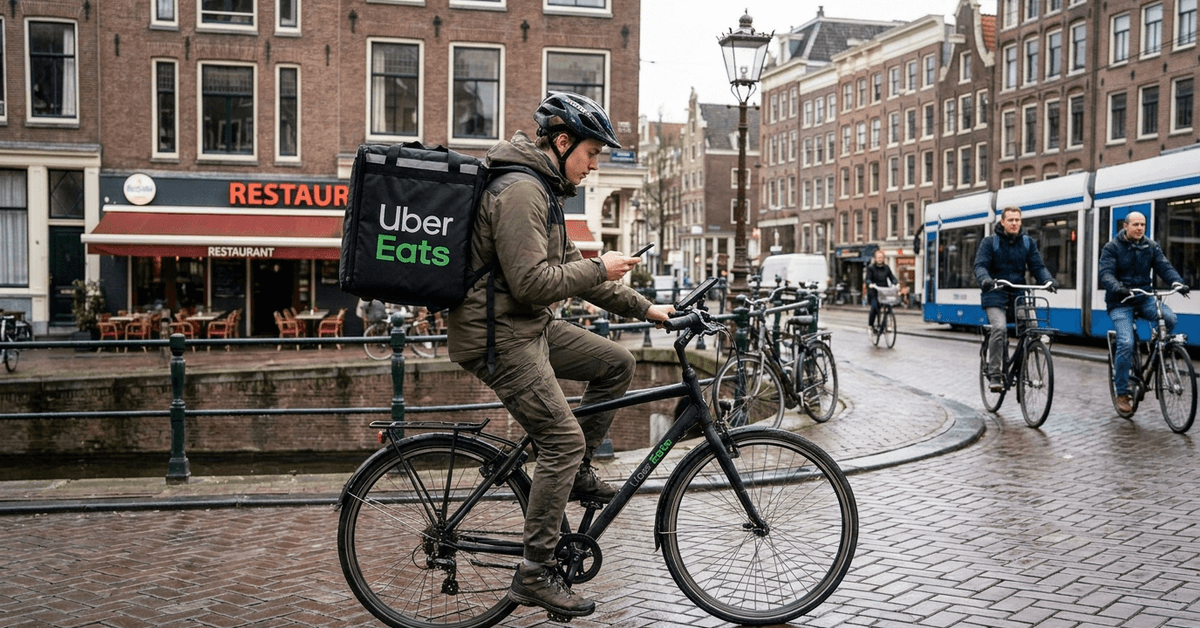
- Bicycle (most common in Dutch cities for ease and cost)
- Scooter (must meet Dutch road regulations, including insurance and license)
- Car (limited cities only; needs proper registration)
Your vehicle must be safe, and scooters or cars require local registration and insurance. Even for a bike, basic safety features like lights and a working bell are mandatory.
Smartphone Requirements
Couriers must have a smartphone (iOS or Android) capable of running the Uber driver app. Consistent mobile internet is crucial for receiving order notifications and navigation.
Bank Account
Payouts from Uber Eats are made weekly, so an active Dutch or European bank account in your name is essential. Some international banks are accepted, yet those based in the Netherlands are simplest for timely payments.
Step-by-Step Uber Eats Delivery Application Process
Applying to deliver for Uber Eats Netherlands is mostly online and straightforward, though each step has its own purpose. Here’s what is usually involved:
1. Register Online
Go to the official Uber Eats delivery application page. Here you’ll enter basic details—name, email, phone, preferred city, and delivery mode. The form takes only a few minutes.
2. Upload Required Documents
This stage checks identity and eligibility. Expect to upload a government-issued ID (EU residence card, Dutch passport, or valid visa), proof-of-address, and driving license if using a motorized vehicle. These go through Uber’s automated and sometimes manual review.
3. Vehicle Information and Checks
If using a scooter or car, you’ll provide details such as license plate and proof of insurance. For bicycles, this isn’t asked, but the app may prompt for photos confirming your ride.
4. Background Screening
Uber conducts basic background checks—a process to flag certain legal issues or previous serious offenses. The criteria, while not always 100% transparent, are fairly standard within the gig industry.
5. App Activation
Once approved, you’ll download the Uber driver partner app, log in, and complete a short onboarding inside the app itself.
At this stage, orientation videos explain delivery flow, safety, and customer service basics.
Total application time ranges from a few days to two weeks. Occasional delays occur if document quality is poor or if there’s high application demand in your city.
Key Uber Eats Courier Requirements in Dutch Cities
While national rules are fixed, each city in the Netherlands can influence the experience. Here are highlights from major locations:
Amsterdam
Here, bicycle couriers are by far the majority, with scooters common but subject to stricter parking controls and zones.
The city often has intense competition at meal times, so high activity leads to better earning windows.
Rotterdam and Utrecht
Delivery zones cover more suburban areas, so commute distances can stretch.
Weather also matters—windy days are challenging on a bike. In these cities, car delivery is less common, but some central areas allow it.
The Hague and Smaller Dutch Cities
Demand patterns fluctuate, often peaking during lunch and dinner hours. It’s not usual for couriers to report quiet periods mid-afternoon.
Local rules on traffic and parking can be stricter, making a bike the preferred choice.
What Documentation Will You Need?
The documentation process is crucial for compliance. Based on recent trends, you’ll be expected to supply:
- Valid ID Card, Passport, or Residence Permit
- Proof of local address (utility bill, rental contract, or official letter)
- Driver’s license and vehicle registration (for motorized delivery)
- Active European bank account details
Uber Eats emphasizes accuracy—mismatched names or expired documents lead to delays.
Keeping everything digital speeds up reviews, although sometimes manual checks add extra days.
How the Earnings and Payment System Works
Delivery earnings depend on several factors: base fare, per-kilometer payment, bonuses, tips, and surge pricing during peak hours.
The Dutch market leans toward transparency, but exact rate structures occasionally shift with demand and city conditions.
Weekly Payout Schedule
Uber Eats pays weekly, usually by Wednesday, for deliveries completed the previous week.
Some banks process payments faster, which can be surprising if your funds arrive ahead of expectations.
Opportunities for Higher Earnings
Bonuses and incentives often appear in the app—think of extra payouts for completing a set number of deliveries or working during high-demand periods.
Cities like Amsterdam show the most frequent surge multipliers during Friday and Saturday evenings.
Not every strategy works every time, and weather or local events can throw things off—realistically, flexibility increases opportunities.
Legal and Tax Considerations for Dutch Couriers
Those delivering with Uber Eats Netherlands typically operate as independent contractors. This means personal responsibility for taxes, insurance, and compliance with local business rules.
Self-Employed (ZZP) Status
Most couriers register as self-employed (ZZP—Zelfstandige Zonder Personeel). This allows you to invoice Uber and manage tax filings yourself.
The Dutch tax authority (Belastingdienst) requires income reporting—even small amounts.
VAT registration is sometimes not required due to freelance delivery’s exemption status, but rules change, so official Belastingdienst guidance is recommended.
Insurance Needs
It’s wise to check your health insurance; couriers aren’t covered automatically for accidents on the job.
Bicycle couriers usually aren’t legally required to carry extra insurance, but with e-bikes and scooters, liability insurance might be necessary. Requirements jump when using a motor vehicle—think WA-verzekering (Dutch liability policy).
Tips for Navigating Your First Weeks with Uber Eats Netherlands
The first few days as a courier can feel unpredictable. Dutch traffic culture moves fast and city layouts may be confusing if you’re not local. Some couriers suggest mapping frequent restaurant locations in advance—others prefer learning on the job.
There are navigation glitches, occasional long waits for orders, and plenty of moments that might test your patience. Still, the flexibility keeps drawing many back.
Conclusion: Getting Started Safely with Uber Eats Netherlands
Delivering with Uber Eats in the Netherlands isn’t just about extra income—it can be a gateway to greater schedule control and city familiarity. The process is structured, with careful requirements for vehicles, documents, and taxes.
Some find the flexibility energizing, while for others it’s an ideal bridge between jobs. If you’re seriously considering it, starting your application at the official Uber Eats Netherlands platform gives you an authentic overview.
Thoughtful preparation, a dose of patience, and realistic expectations will help pave the way for a smooth start in this uniquely Dutch delivery scene.