
Withdrawing money abroad can be confusing. 7-Eleven ATMs often look like the easiest answer, especially across Asia. These machines are everywhere, seem reliable, and usually have English menus. But there’s more to it than just convenience.
This guide covers how 7-Eleven ATMs work with foreign credit cards, common fees, withdrawal limits, city-by-city differences, and practical safety tips. It’s designed for travelers, expats, and digital nomads aiming to safely access local currency at fair rates.
Why Choose 7-Eleven ATMs Abroad?
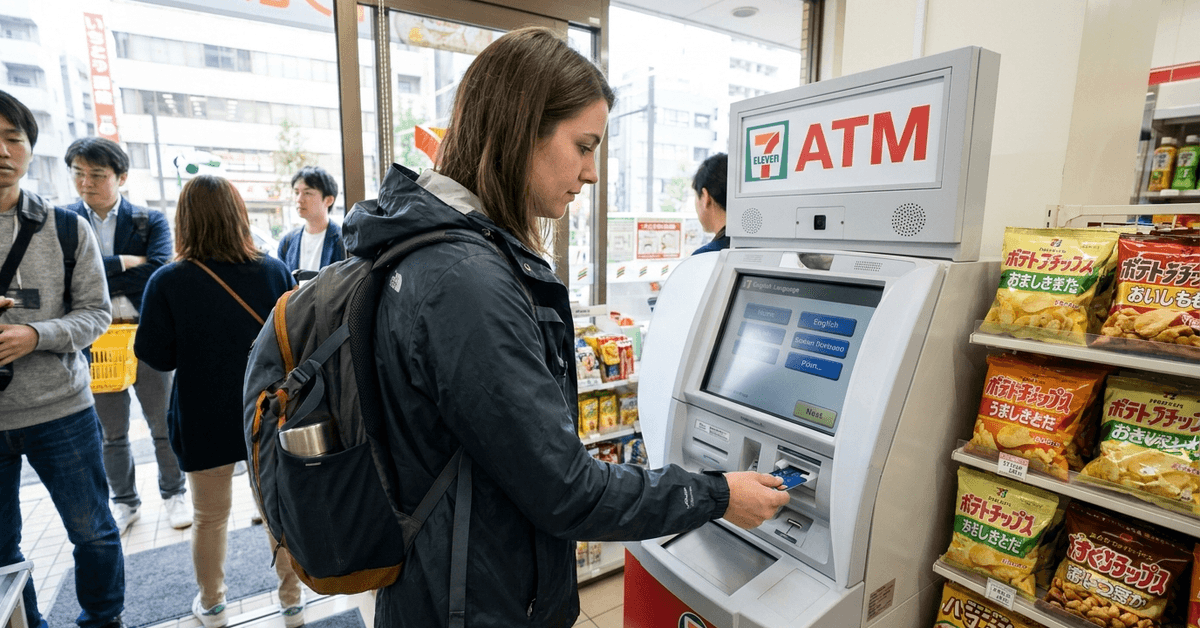
Major cities such as Tokyo, Bangkok, and Taipei have thousands of 7-Eleven stores. Most include an in-store ATM. These machines are a lifeline for international cardholders.
Wide Global Network
7-Eleven ATMs operate in Japan, Thailand, Taiwan, Malaysia, and more. International accessibility is what makes them a top choice for travelers and expats moving between destinations.
Reliable Functionality
Menus are usually available in English, Chinese, and Japanese. The machines accept major networks like Visa, MasterCard, Cirrus, Maestro, and Plus. This helps avoid language barriers and network issues.
Safety and Availability
7-Eleven stores are well-lit, open 24/7, and located in busy neighborhoods. This reduces the risk of theft or scams compared to isolated ATMs or unfamiliar kiosks.
Using a Foreign Credit Card: Step-by-Step
The ATM process is quick and straightforward in most locations. Below is a stepwise breakdown for first-timers.
- Insert your foreign card, chip or magnetic stripe facing as shown.
- Select language (English, Japanese, or others).
- Choose “Withdrawal” or “Cash Advance” from the main menu.
- Enter your PIN number. Most ATMs require a 4-digit PIN.
- Pick your withdrawal amount. Options vary by machine and currency.
- Review the on-screen fee and exchange rate estimate.
- If you agree, confirm the transaction. Collect both your cash and the transaction receipt.
- Don’t forget to retrieve your card—some ATMs return cash and card separately.
Understanding Fees and Charges
Fees are the biggest concern for most international card users. Both 7-Eleven itself and your own bank may charge withdrawal-related costs. Staying aware helps keep expenses in check.
ATM Operator Fees
The 7-Eleven ATM may charge a direct usage fee. In Japan, for example, this usually ranges from 110 to 220 yen per withdrawal (about $0.80 to $1.60 USD as of early 2024).
Foreign Bank Fees
Your own bank could charge “foreign transaction,” “out-of-network ATM,” or “cash advance” fees. Typical charges fall between $3–10 USD per withdrawal, plus a percentage (often 1%–3%) of the total.
Exchange Rate Margins
ATMs often convert using wholesale market rates, but there’s usually a small markup (0.5%–2%). DCC (Dynamic Currency Conversion) offers to bill in your home currency but is nearly always less favorable. Selecting “local currency” on screen is generally better.
- Example: Withdraw 10,000 JPY in Tokyo. Estimated costs:
- 7-Eleven ATM fee: 110 yen
- US bank ATM fee: $5
- Foreign currency markup: 1–2%
Checking your home bank’s published rates before travel can save unwelcome surprises.
Withdrawal Limits by Country and City
Withdrawal limits affect how much cash you can access in one go. These caps differ widely across regions, even within the same country.
Japan
Most 7-Eleven ATMs set a maximum single withdrawal limit of 100,000 yen (around $670 USD). Some urban locations may have lower limits on international cards, especially at night.
Thailand
The usual limit is 20,000 Thai baht per transaction (about $550 USD). Some ATMs set higher or lower caps depending on branch or downtown vs. rural locations.
Taiwan
ATMs commonly allow up to 20,000 New Taiwan Dollars (about $650 USD) per withdrawal, but limits can fluctuate based on network or city.
- Crowded city-center stores usually have higher limits, thanks to regular international traffic.
- Small-town or rural 7-Elevens can restrict withdrawals, especially after hours or late at night.
Some banks may have their own additional daily or per-transaction limits, especially on “cash advance” requests with credit cards. This is a key point to confirm before departing.
Best Practices to Maximize Safety and Value
Minimizing costs and risks means being a bit strategic. Simple changes in habits can save money and help avoid fraud.
Withdraw Larger Amounts Less Often
Since most fees apply per transaction, it’s usually more cost-effective to make fewer, larger withdrawals. This minimizes repeat charges from both the ATM and your home bank.
Stay Alert and Prepare
Avoid using ATMs late at night in deserted areas. Stepping into a 7-Eleven with more people around adds a layer of safety. Bringing a friend is always a good idea.
Use Helpful Apps
The Seven Bank ATM Locator app in Japan shows real-time status and English menus. Google Maps also highlights 7-Eleven ATMs that support international cards with recent user reviews.
Check Daily Bank Limits and Notify Travel
Some cards have daily withdrawal caps or foreign transaction locks by default. Notifying your bank before departure, and enabling travel alerts via mobile banking, can reduce headaches if issues arise abroad.
Watch for ‘Skimming’ Risks
Glance at the card slot before using. Devices that seem loose or odd can be potential skimmers. Trust your instincts—if a machine looks suspicious, switch to a different 7-Eleven location nearby.
When to Avoid 7-Eleven ATMs
Even with all the benefits, there may be times to skip a 7-Eleven ATM for cash withdrawals.
- Some travel cards (like Charles Schwab or Wise) offer zero-fee or lower-fee networks at other banks. In Tokyo, for instance, Japan Post Bank ATMs may be less expensive for US debit cards.
- Occasionally, 7-Eleven ATMs go offline for short maintenance windows between 3–5 am local time. Planning your cash needs ahead helps avoid emergencies at inconvenient hours.
- Cash advances on credit cards accumulate interest immediately, while debit withdrawals do not. If budgeting is a concern, using a linked debit card usually carries less financial risk.
Pro Tips for Different Traveler Profiles
The best approach can shift depending on why and how long you’ll be abroad.
Short-Term Tourists
Using 7-Eleven ATMs for small cash needs (such as 10,000–20,000 yen for transport and snacks) is straightforward. Tracking conversion rates and receipts helps reconcile trip costs later.
Remote Workers and Digital Nomads
Longer stays may call for setting up a local bank account or using multi-currency cards like Wise (formerly TransferWise). These can reduce both ATM and foreign transaction fees, especially for higher or recurring withdrawals.
Residents or Frequent Travelers
Signing up for a no-foreign-fee debit card in your home country is an effective strategy. Regulars might try withdrawing just after local payday, when ATMs are less crowded and freshly stocked with bills.
Conclusion: Making the Most of 7-Eleven ATMs Abroad
With quick access, wide locations, and global card support, 7-Eleven ATMs are often the simplest route for international cash in Asia. Still, paying attention to fees, withdrawal caps, and personal safety is essential.
Understanding each country’s quirks and taking a few small precautions goes a long way. Checking your bank’s fee policy, using locator apps, and withdrawing sensibly can make a real difference in your travel budget and peace of mind.
Careful use of 7-Eleven ATMs turns an everyday travel task into a hassle-free experience with no unwelcome surprises—freeing up more time for things that truly matter on your journey.


