
A secure personal loan in Mexico sounds simple until the application asks for recibos de nómina. Nearly 55% of Mexican workers earn their income informally, according to INEGI's Q1 2026 data.
Every "best personal loans in Mexico" list opens with bank products that require exactly what these workers lack: a payroll account, a formal employer, and three months of bank statements. The comparison looks helpful. It just excludes half the country.
This guide is for the informal earner, the freelancer depositing through OXXO, or the small-business owner whose income shows up in cash. If a bank has already told you no, the fintech options that follow could work. But only if you read one number first.
CAT: The Only Number That Tells the Real Cost
Lenders in Mexico love advertising low interest rates. A bank might show 25% annual. A fintech might show 3.99% monthly. Both numbers are incomplete on purpose.
The Costo Anual Total (CAT) wraps interest, commissions, mandatory insurance, and every other charge into a single annualized percentage. Mexican law requires every lender to publish it before you sign.
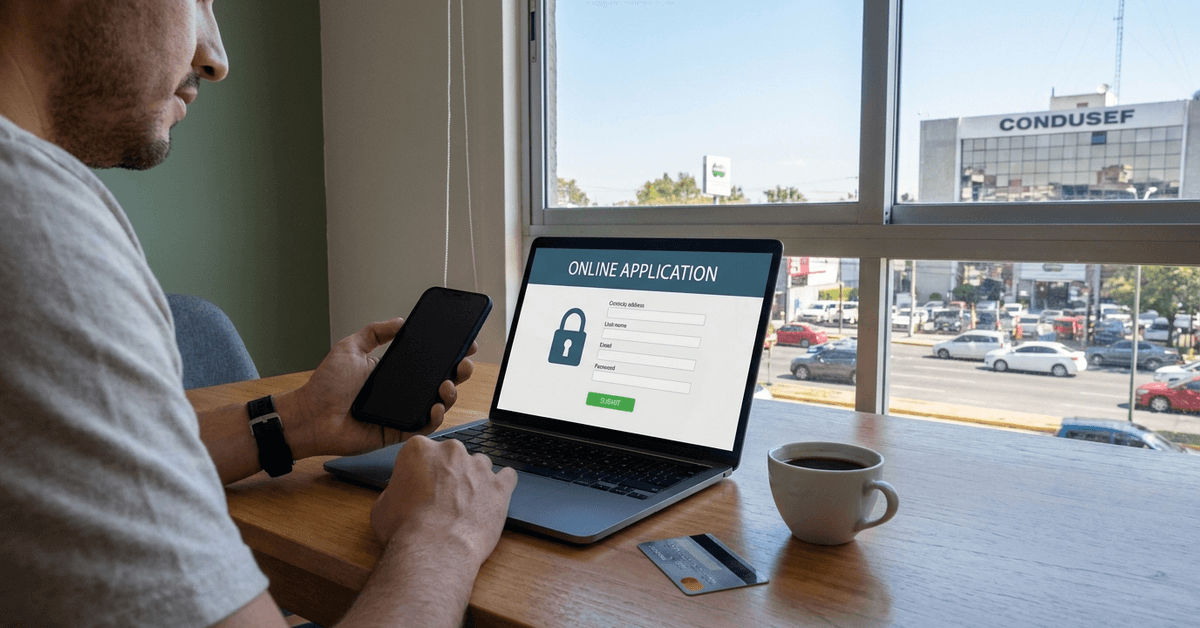
I would never compare two loan offers on interest rate alone, because a BBVA personal loan with a 25.75% annual rate and a 4% opening commission lands at a CAT of roughly 36%, while a product advertising a lower rate but bundling life insurance might cost more once the CAT shows up.
How CAT Changes Between Banks and Fintechs
The CAT difference between institutions is enormous. Hey Banco sits around 36.2% CAT. Banorte comes in near 48.5%. BBVA México averages 54.2%, and Citibanamex reaches 68.4%. Those are bank-tier numbers.
Fintechs and SOFOMs are a different range entirely. CONDUSEF's June 2026 data places commercial bank CATs between 42% and 118%, while fintech microlenders on short-term loans push past 200% and sometimes reach 400% to 600% when annualized.
That spread makes one thing clear: comparing a 3-month Kueski loan CAT to a 36-month BBVA loan CAT is like comparing taxi fare to a car lease payment. The product types do different things at different price points.
Bank Loans vs. Fintech Loans in Mexico: Who Gets Approved?
The gap between banks and fintechs goes beyond pricing. It sits in eligibility. Banks want formal employment proof, clean Buró de Crédito history, and at least six months of job tenure. Fintechs run alternative scoring models and approve borrowers with thin or messy credit files.
Side-by-Side: Three Lender Types Compared
| Feature | BBVA (Bank) | Creditea (Fintech) | Kueski (SOFOM) |
|---|---|---|---|
| Loan range | $3,000 to $750,000 MXN | $2,000 to $70,000 MXN | $400 to $26,000 MXN |
| CAT (approx.) | 36% to 54% | ~120% to 182% | ~153% |
| Requires nómina? | Yes (for best rates) | No | No |
| Buró de Crédito check | Strict | Required, clean history preferred | Flexible |
| Approval speed | Same day (if preapproved) | Under 24 hours | Minutes |
| Prepayment penalty | None | None | None reported |
The takeaway: if you have formal employment and a clean Buró, a bank will always be cheaper. If you lack those, a fintech fills the gap at a much higher cost.
I Disagree With "Always Pick the Cheapest CAT"
I think the advice to always chase the lowest CAT misses something for informal workers using platforms like Kueski.
A $5,000 MXN Kueski loan at 153% CAT paid back in 60 days costs a different amount in real pesos than a $50,000 Creditea line at 120% CAT stretched over 24 months.
Short-term microloans look terrifying when annualized, but the actual peso cost on a small amount over a few weeks can be lower than a year-long obligation with a "better" CAT. The math depends on your repayment speed, not just the percentage.
What Informal Workers Can Qualify For
INEGI reported that the informality rate hit 54.78% in Q1 2026, with 32.63 million workers in informal positions. That population needs credit too, and a few platforms have built their models around serving it.
Kueski: Small Amounts, Fast Turnaround
Kueski has issued more than 35 million loans. First-time borrowers get 0% interest on up to $2,000 MXN. After that, the CAT of 153% kicks in. Loans run from $400 to $26,000 MXN with repayment windows of 99 to 180 days.
Requirements are minimal:
- Mexican nationality and valid INE
- A personal bank account (no nómina needed)
- An email address and phone number
The catch? Limits start low. Kueski builds your ceiling over time based on repayment behavior. A first-time user may only access $2,000 MXN, regardless of income.
Creditea: Larger Amounts, Higher Bar
Creditea has operated in Mexico since 2016 and has issued over 390,000 loans. It offers amounts from $2,000 to $70,000 MXN with repayment periods of 4 to 60 quincenas.
The difference: Creditea checks your Buró de Crédito and requires minimum monthly income of $10,000 MXN.
That still excludes many informal earners, but the credit line structure means approved borrowers can draw funds repeatedly without reapplying. Think of it as a fintech credit card without the plastic.
BBVA Préstamo Personal Inmediato: The Bank Option
BBVA offers personal loans from $3,000 to $750,000 MXN at fixed annual rates of 25.75% to 45.75%, with terms from 6 to 72 months. No prepayment penalty.
The CAT for nómina loans sits at 26.8%, while the Préstamo Personal Inmediato averages 36.1%.
This is the best rate in the group, and the hardest to qualify for. BBVA requires a preapproved offer, formal income verification, and a strong Buró score. BBVA's personal loan page lists full requirements.
Five Mistakes That Cost Borrowers Real Money
Approval speed is exciting. Signing fast is expensive. A few patterns show up again and again among borrowers who end up overpaying.
- Comparing interest rates instead of CAT. On a $100,000 MXN loan at 36 months, a 15-percentage-point difference in rate can mean over $30,000 extra in total interest.
- Extending the term to lower the monthly payment. Longer terms reduce each payment but raise the total cost. A 60-month loan at the same rate costs dramatically more than a 24-month version.
- Ignoring bundled insurance. Some lenders include life insurance or payment protection by default. The cost is baked into the CAT, but if you can opt out and save, do it.
- Not checking the lender's CONDUSEF registration. Any platform operating legally in Mexico must be registered. CONDUSEF's verification portal lets you confirm this in minutes.
- Borrowing from multiple fintechs simultaneously. Each application hits your Buró. Stacking short-term loans at 150%+ CAT each creates a debt spiral fast.
What a "Secure" Loan Process Looks Like in 2026
The word secure gets thrown around loosely in fintech marketing.
A loan is secure when three conditions are met: the lender is registered with CONDUSEF or CNBV, the CAT is disclosed before you agree to anything, and your personal data is protected under Mexican privacy law (Ley Federal de Protección de Datos Personales).
Verification Takes Two Minutes
Type the lender's name into CONDUSEF's SIPRES registry. If it appears with active status, the lender is supervised. If it does not appear, walk away.
Unregistered lenders have no legal obligation to follow fair-lending rules, and complaints filed against them go nowhere.
Red Flags for Predatory Apps
Loan apps that request upfront payment before disbursing are almost always fraudulent.
Legitimate lenders deduct fees from the disbursed amount or add them to the repayment schedule. Any app that asks for a "processing deposit" via OXXO transfer is running a scam.
Questions People Ask About Secure Personal Loans in Mexico
A few of these come up constantly in search queries and forums. The answers below add context beyond what the sections above cover.
- Q: Can I get a personal loan in Mexico without Buró de Crédito? Kueski and a few other SOFOMs use flexible Buró evaluation, meaning a low score does not automatically disqualify you. "No Buró" is marketing language, though. Every regulated lender runs some form of credit check. The difference is how strictly they weigh the results.
- Q: What is a good CAT for a personal loan in Mexico in 2026? Among banks, anything below 40% CAT is competitive. Among fintechs, Creditea's ~120% is on the low end for the segment. Kueski's 153% is typical for short-term microloans. A CAT above 200% should make you recalculate whether the loan amount and timeline justify the cost.
- Q: Do fintech loans in Mexico report to Buró de Crédito? Regulated fintechs and SOFOMs are required to report. Paying on time builds your Buró score, which can later qualify you for cheaper bank products. Missing payments damages your score the same way a bank default would.
Conclusion
The gap between a bank's 36% CAT and a fintech's 153% CAT is not a quality judgment. It reflects who each product was built to serve and at what risk level.
Informal workers locked out of bank loans still have regulated, legal alternatives worth exploring.
Compare the CAT, verify the CONDUSEF registration, and never sign anything that hides the total cost. The secure loan is the one where you understood every number before your signature.


